



Who We Are
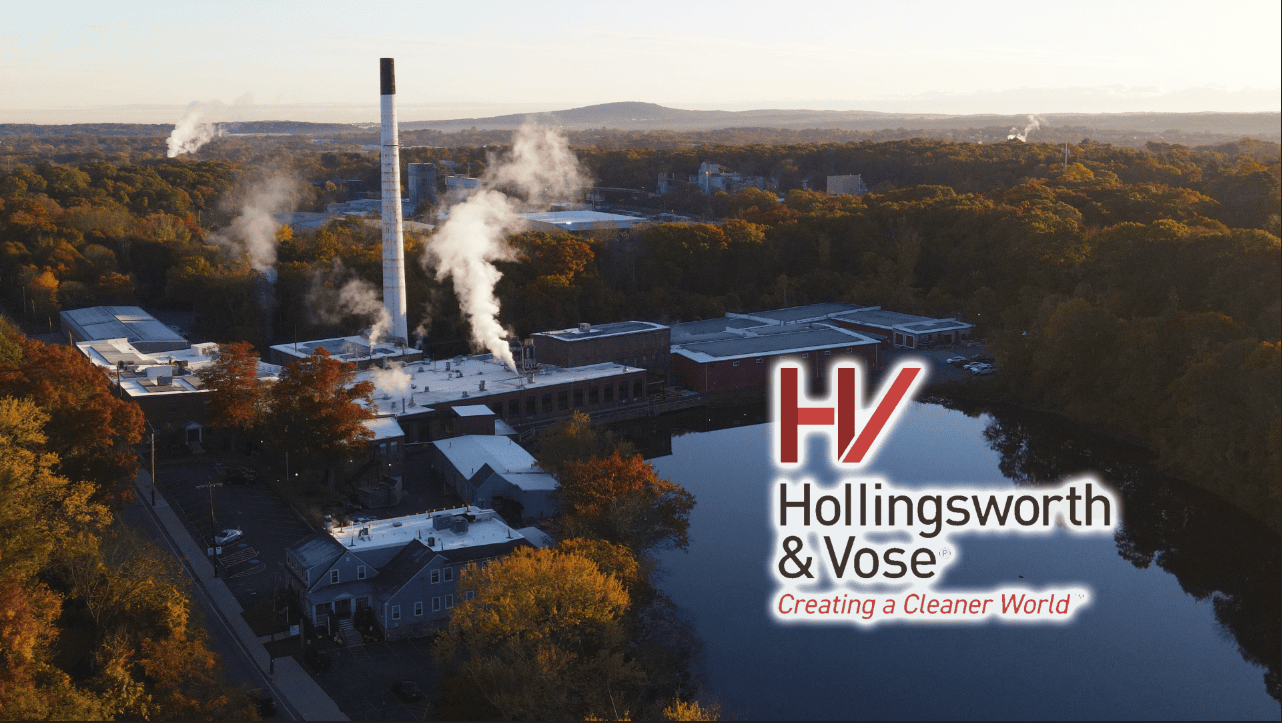
As a global leader in filtration, we’re providing solutions that are helping improve the health, safety, productivity and sustainability of not just our customers products, but of the end user products. We’re saving energy and applications. We’re improving indoor air quality. These things have direct, measurable impact on the benefit of the world.
We have a nearly 300 year history of sustainable growth, using innovation as our cornerstone. It’s in our DNA. So we have innovated for the last 200 years and will do it for the generations to come.
Innovation definitely goes beyond R&D, right? It starts from operations, R&D all the way to the back end. The shipping department, where we are constantly looking to improve on how we make products, ship the products, everything. So it permeates throughout the organization.
The technology is extremely exciting. We create nanotechnology solutions that are as complex as rocket science. Whatever we all faced with, I know the R&D people will come up with a solution. Customers can come to us with highly complex problems and we can help solve them. We have more than 100 scientists working on cutting edge research.
Our H&V employees come from different backgrounds, cultures, experiences, and they bring unique sets of skills and perspectives to the table. And H&V is able to leverage this intellectual diversity to create the best solutions for our customers. But innovation isn’t just new products. It’s really about how we approach end users and how we work collaboratively with our customer base to make sure we have the right products and that they’re effectively commercialized. Our ability to innovate starts with fall leadership and the fact that we are a family owned company. And because of this, there is a willingness to take risks to meet new challenges.
Every decision has aim to create value for future generations of employees. This family ownership and stability has a deep impact in our culture, providing a safe, supportive and inclusive environment for our employees to grow and thrive.
In our seventh generation, it gives us a long-term view, a level of commitment and determination to do the right thing and be good stewards of the business and hopes it will be future generations that benefit from it. And I think our employees feel that too, and a lot of different ways. We have multi-generational employee families that work within each and every department.
And I think it creates an atmosphere that not a lot of companies have today. We have to serve the global markets locally to be tuned in enough to what those markets need, what those customers need. We built a global footprint in Asia, in the US and Europe. We have over a dozen facilities around the world. We have hundreds of employees in dozens of communities across the globe. That global platform allows us to meet our customers needs quickly and efficiently, wherever they are.
Our employees are curious, creative, and they continuously innovate to anticipate and solve the filtration and energy needs of the future. Whatever challenge we’re faced with, I know that our technology, our research and development teams will come through with a viable solution.
Customers can count on coming to H&V talking about their problems, and will be able to provide solutions.



H&V has a multigenerational, passionate, and dedicated global employee base. Our employees are curious, creative, and they continuously innovate to anticipate and solve the filtration and energy needs of the future.
The thing that I’m most proud of about H&V is we create innovative technical products that have a significant positive impact on quality of life for people. H&V has a unique opportunity for people that want to make a difference in the world.
We take a long term view. We’re not driven by quarterly results. We care a lot. The ownership of the company cares a lot. We get a lot of employees who care a lot. And when you’re making the critical product in high-end filtration that touches the world in so many places and you don’t hear of H&V, but in a year’s time, we’ll make material for more than 2 billion batteries and filters. You’re touching people around the world.
Nowadays, most employees want to work for companies that make a positive impact in the world. You may be surprised to know that you’re never more than six feet away from an H&V solution. For example: the car you drive, the cell phone you use, the computers that we use in our everyday life. All of this is impacted by H&V products.
I’m proud to be part of H&V because we as a company working on the toughest challenges infiltration and separator technologies. H&V is a technology company, but we’re driven by our values, integrity, commitment and innovation. You know, we often say it’s hard to put a finger on exactly what makes H&V so special, but if I had to articulate it, I’d say it’s the people. And it’s that idea that we’re a family type company.
H&V is also a family-owned company, and you feel how our leadership cares about our employees at H&V. Employees are pivotal to our success and they shape our journey towards the future.
H&V is always leading innovation in the industry. We’re building innovation not only into our products, but also in the process we do business, the way we serve our customers, and that also continuously improves ourselves.
The Air Exchange Podcast
Season 1

Bruce Lorange
Hello everyone and welcome to the Air Exchange, a Hollingsworth and Vose indoor air quality educational series. I’m your host, Bruce Lorange. And I am pleased today to have with us our esteemed guest Alain Bérard, who is the global sales and marketing president for Camfil, as well as the world’s very first Chief Airgonomics Officer or CAO, which we’ll learn more about during this episode.
Bruce Lorange
Alain, thank you so much for taking time during your very busy schedule to be here with us today.
Alain Bérard
Thank you very much for inviting Bruce. It’s a real pleasure to me.
Bruce Lorange
Well, maybe for the sake of our our viewers, you can share a little bit about your background at Camfil, and a little about your experience and how that’s shaped your passion for filtration and indoor air quality.
Alain Bérard
All right, exactly as you said, Bruce, I am the President for Sales & Marketing at global level and I am. I’ve been with Camfil for 26 years now in various top management functions. What I really like at Camfil is that passion we have for clean air and all kinds of solutions, depending on segments and applications. For us to be able to clean the air and therefore protect people, protect industrial processes and protect our planet.
Bruce Lorange
Excellent. Well, the idea of a Chief Airgonomics Officer is fantastic. It seems long overdue. It would be great to hear a little bit about how the idea came about, how Camfil decided to introduce this role, and maybe a little about what it means to you personally as well.
Alain Bérard
All right. Let me say a few words about Camfill and then I’ll explain how we came about this with this CAO Chief Airgonomics Officer initiative. Camfil is one of the global leaders when it comes to clean air solutions. We primarily make filtration solutions for both commercial and industrial applications. We are about 6000 employees spread around our planet in 35 countries.
Alain Bérard
We have been very innovative, I think, in terms of filtration technologies and products, always aiming at supplying good efficiency, good performance filters with the lowest possible TCO, total cost of ownership. Talking primarily about energy savings. We have been very active in terms of promoting standards, international standards in the industry. And I must say we’ve been one of the leading forces when it goes to implementing sustainability within the industry.
Alain Bérard
That has been the 15 year journey for us already. So how did we come to that? A new approach? We had kind of long brainstorm process. Very end of last year. And we said, look, we’ve deployed tons of ideas, primarily very technical oriented with standards and numbers. And we said, look, now we need maybe more human approach. We would need someone to be able to advocate about clean air, to be able to talk about possible solutions.
Alain Bérard
And basically, we said, look, we need an ambassador. So how do you portray an ambassador? Yeah, it’s a C-suite guy. So, Chief, “Air”gonomics, meaning we play with the words air and ergonomics. So we said, look, it’s going to be best practices around indoor air quality. So. Chief Airgonomics Officer. So it’s just a an extension of our journey when it goes to advocate about clean air.
Bruce Lorange
Excellent. Well, I can’t think of a better ambassador, Alain. And, you know, I know that you’ve started to roll out the idea, you know, leading by example at Camfil. While this is something that the hope is that there will be wide scale adoption across, you know, multiple companies building, you know, building owners getting behind this and so on.
Bruce Lorange
But from the experience that you have as the first CAO within your own company, can you share how this has been received even by your own team or any, you know, any information about how it’s been to roll this out in your company and what sort of feedback you’re getting internally?
Alain Bérard
All right. Yes, very good point. We are cautious and careful and would like to proceed step by step. So we said, look, we want to understand what we are going to talk about so that you can basically practice what we preach. Right. So what are we going to talk about? We said, look, to be very cautious here. Let’s do the first phase of that CAO journey purely internally.
Alain Bérard
So we want to protect our employees in terms of bringing to them a good indoor air quality in all our facilities, offices, branches, factories around the globe. All right. So we started we launched that internal initiative back in March this year. Our CEO, Mark Simmonds, nominated me or appointed me as CAO, and we started cascading a kind of an organization, a CAO network.
Alain Bérard
We now have more than 100 AO’s… Airgonomics Officers in basically or in all our facilities. We’ve equipped all those AO’s with sensors, IAQ sensors, so that they could measure and track indoor air quality in our facilities. And for the past three or four months now, we’ve had real-time IAQ measurements in more than 100 locations, basically our Camfil planet.
Alain Bérard
So through that exercise, we’ve been able to understand how to measure, how to make any conclusion, how to improve air quality in our offices, in our factories, warehouses, and so. So that has been a great learning curve for us. Amazing.
Bruce Lorange
Fantastic. I mean, I think it’s wonderful that, again, you’re leading by example and as a filtration solutions company. Of course, your culture, I think, internally understands the importance of indoor air quality, maybe more than a lot of other companies, or you’re thinking more about it. I’m curious, you know, since the goal is, of course, to see this CAO role and a focus on indoor air quality more prominent across all sorts of companies, buildings, facilities, how do you how do you see this being received?
Bruce Lorange
I know, for example, for the last few months I’ve seen on LinkedIn that Camfil and also the ChiefAirgonomicsOfficer.com website has been promoting and advocating this concept. Have you gotten feedback or interest or what are you seeing out there as far as the interest level of companies that aren’t as familiar with or part of the filtration industry?
Alain Bérard
Right. Good one. But let me come back to our internal phase first, because even at our level, knowing quite a bit in terms of indoor air quality, we’ve had difficulties building up our structure, which should be a Chief Airgonomics Officer? What should he or she do?
Bruce Lorange
Right.
Alain Bérard
And it’s easy to define. It’s easy to plan and elaborate. And certainly comes the investment part or you’ve got to invest so that you can improve air quality. Alright. We are exactly in that process right now. Budget time thinking about 2023 and you know, money… money talks. So next year, each managing director of our door companies have to come up with an investment plan in this warehouse.
Alain Bérard
I’m going to invest in an air cleaner so that will clean the air and provide good air to my employees. Good. So we’ve been going through that process and there are challenges, money challenges, understanding challenges. And so so that’s one overall that has been very well perceived. But we shouldn’t hide difficulties and challenges. Okay. Now, late December, we decided to start our external communication campaign and we launched a micro website and a LinkedIn group called the Chief Airgonomics Officer Network.
Alain Bérard
We now have more than 600 members on that LinkedIn group. And the perception to me, the perception has been extremely positive. Start with we have a few KPIs and metrics to understand how well this is perceived, both the time spent by visitors to both the website or the LinkedIn group. It just gives you an idea of how interested those visitors are.
Alain Bérard
Then we’ve had a couple of guys, a couple, a couple of hundred guys calling us and saying. How should I proceed? I am interested to put is there an educational program or how can I talk about how should I proceed? Moving forward? So we’ve been helping the guys step by step. And because of all those common questions coming from here and there, would that be India, China, US, Europe?
Alain Bérard
And so we said, okay, there are a couple of things we are going to work out. One is a training program that we will launch first week of January. It will be seven sessions, small videos and some webinars. So people will be able to subscribe, go there, spend an hour, understand the the highlights at least, and then go through the training program.
Alain Bérard
That’s one tool we have tried to make very simple the way to proceed in terms of measuring your air quality, improving your air quality, you should be in charge to talk to that. And so all that organization and the process. So we are now at a point when I think we have a much clearer idea on how to proceed.
Alain Bérard
But one thing is really important is that at Camfil we only make filters to provide good air quality to your employees. You also need a good air handling unit and a good sign and an end. So we are only a kind of a part of the of the overall solution. So we are definitely looking for partners. And this was one of the reason for getting in touch with you at H&V because again, we are only Camfil, but we would be delighted facilitating some kind of partnership and alliance, all talking clean air.
Bruce Lorange
Yeah, fantastic. I think, you know, an ecosystem around clean air is certainly needed. And you know, Camfil is taking a leading role there, I think, with this CAO position. And I wanted to to kind of expand a little bit more on this idea of you know, costs when you mentioned we have to be open to the realities and the challenges of this.
Bruce Lorange
It is a new concept, again, for you and I who are in the filtration industry and others like us. We spend a lot of time thinking about these things, but this is still a pretty new space, an area to think about largely since COVID for most people who are not filtration industry specific. So, you know, one question I have we know we’ve seen a lot of the the data and we’re hearing constantly that humans are an indoor species and we spend over 90% of our time indoors.
Bruce Lorange
And that, of course, air quality can be 2 to 5 times or even higher, you know, worse than the quality of air outdoors and so on. So the health upside seems to make sense and people understand that. But of course, money talks, as you said. And for business owners or those who are paying for clean air in an organization, are there any financial benefits?
Bruce Lorange
I’ve seen different reports in and research around productivity improvements and less absence days and even the potential for building owners to offer higher rents for cleaner air because of some of these financial benefits. Are there any financial upsides or bottom line impacts to clean air that that you can comment on or talk to that would maybe make it easier for a company or, you know, someone who’s implementing this within their company and building to think about financial advantage is not just health advantages of clean air routes.
Alain Bérard
But there’s very good point. I see clean air as a very sound investment. In other words, health is one part of the story. But who pays for health costs? You do. I do. But with our employers do so mixed and yes, no, that’s debatable depending on countries. And so what is clear to everyone is that absenteeism kills, that increases costs to an extent that I mean, everybody can calculate what the cost of absenteeism, replacing people and ensuring they are educated enough for that position.
Alain Bérard
So that’s one to its productivity. I am in good moods, in good health condition. Do I produce more or less than a guy who is constantly sick? There are studies so like lacking time here to go through those studies. But actually that’s one of those big training sessions that we have come up with as far as the January launch.
Alain Bérard
So we will go through that. We do not have our own studies at Camfil, but we read, we rely on external parties, third parties, which are not questionable. Would that be the W.H.O. here? Some universities, famous universities, primarily in the US and England. And based on those facts, everybody can assess what the financial cost is for not protecting people and what is the financial advantage of ensuring that everybody agrees is good there.
Alain Bérard
But Bruce, you mentioned COVID and I think it’s absolutely key to understand that our people, our employees have gained a lot in, I would say, awareness about what’s in the air because it is an airborne virus. How can you protect yourself against COVID, either a mask or a good age system that operates and stops viruses? All key that awareness is there.
Alain Bérard
So more and more people are now paying attention to if I come back to my office, am I protected here? Or I applied to a new job, a new company? Do you pay attention to your people, mister? So those questions cannot be avoided. I think it’s part of our today’s working environment, and I think to that extent, investing in clean air is a very sound investment, very sound investment.
Bruce Lorange
And yeah, certainly important to be advocating for this because sometimes cleaner air does take some investment and can cost more. But there is a lot of upside beyond the obvious of just health and having a better environment indoors. Something that I’m curious about knowing that likely at Camfil you own some of your facilities and and your facilities managers are internally part of your team for companies that don’t own the building that they operate in.
Bruce Lorange
How do you see the CAO working with facilities managers or building owners? Do you see any any challenges there or, you know, what is your thinking around how there can be some harmony in thinking between the occupants who are benefiting from clean air? And the building owners are facilities managers who are often managing the filtration and in charge of really what happens in the facility.
Alain Bérard
Okay, okay. Different scenarios here. But if I take them one by one as Camfil, I am a landlord. I own my factory and my offices and I want to protect my people. So I’m going to invest and ensure that the investment gives a good payback and I will provide the good, clean air. I do not own my facility, but I rent it, lease it. All right.
Alain Bérard
So I’m going to find out whether the landlord wants to invest or I’m going to do it by myself. There are portable mobile solutions which are totally okay. We call that CamCleaner – air cleaners – CamCleaners as in the case of Camfil. That’s common product, easy to buy, installing use, and everybody can go through that route. Now, as good to you mention the companies handling those facilities on behalf of landlords.
Alain Bérard
A lot of the biggest facility management companies are now coming to us. I have in mind five different names because the those big guys now understand that clean air is a part of the value of that building. In other words, would you be able to find tenants saying, we guarantee that baa, baa, baa, baa, baa. You obviously increase the valuation of your of your building, your facility.
Alain Bérard
So I’m not saying that all guys are aware of that, but the ones we have got, the points are clearly moving in that direction, making it a kind of differentiation versus their competitors.
Bruce Lorange
Great points, Alain, and I think it’s great that you highlight even if there isn’t an ability to control the fact unit, that there are other environmental actions you could take for cleaner air like room air purifiers and such. But hopefully, you know, part of the goal of of what you’re advocating for and hopefully an ecosystem emerging that can advocate for cleaner air in buildings is that building owners and facilities management companies will start to see the value and that tenants, occupants and their health and the importance will start to to overcome some of maybe the preconceived ideas around what, you know, what expenses there could be and so on.
Bruce Lorange
So really great insights. One other question I had, Alain, is related to just the ecosystem. To go back to this idea about partners. We know that this is going to take some time for the general public to really be thinking about clean air in the way that filtration professionals are, and maybe medical professionals. What can you comment a bit more on?
Bruce Lorange
You know, how you see an ecosystem forming or what sort of information would be helpful, how we can communicate better to the general public to help the Chief Airgonomics Officer initiative to spread and become more widely accepted.
Alain Bérard
Hmm. Good. That’s that’s a big challenge. I’m telling you. At Camfil, we are purely in the B2B business. We do not talk to consumers. We don’t know how to operate in that field. So I’m going to stick to the pure B2B side of it. What we see is a bunch of companies have as business concept basically cleaner air handling unit manufacturers find manufacturers.
Alain Bérard
All those guys are primarily working towards air movement and preferably clean air movement or the way I see it is that they are already some trade association of all kinds. Would that be in Europe or in the U.S. or even in Asia-Pacific? And those guys are getting interested. That’s for now. We are also trying a couple of attempts with influencers which are not directly acting in our field.
Alain Bérard
Those guys are not suppliers or customers of Camfil, but they have some influence over various stakeholders in that in that industry. And I’m thinking because it’s really our DNA, I’m thinking about scientists, I’m thinking about guys who have studied the health impacts of clean air, because I think that one of the main challenges when it goes to talk about clean air is the fact that air is invisible.
Alain Bérard
You don’t see the dust, you rarely see dust. I mean, when you talk about clean water, you can easily see that that water is muddy, right? It’s not clean. But when it goes to air, it’s difficult to see. And basically that invisible world is very difficult to detect. But there are so many people who have already studied effectively by the microns of micron, and so the health impacts of particles of gases.
Alain Bérard
And so that I would very much like to see within those partnerships, not only industrial stakeholders, but also scientists and guys who can truly talk about health impacts. Now, there are also people and we are working with some universities studying mental health in relation to air pollution, for instance, productivity, creativity as the result of clean or dirty air.
Alain Bérard
And that might be really interesting, not talking about health, but talking about productivity at work. So I think we have to join forces here. And if Camfil may help here, that will be with a lot of pleasure.
Bruce Lorange
Fantastic. I mean, really great insights, Alain. And I think the other thing that that sticks out to me is the importance of simplifying or demystifying the data, as you mentioned, because this is an invisible issue, largely in some ways. I picture it as we’re sort of all goldfish swimming in tanks that are not as clean as we think.
Bruce Lorange
But until the advent of sensor technology, which is getting more affordable, more prevalent, it’s been hard to know the data. But then once we have the data, making it simpler, easier for people to understand that are not from a science background. And so we clearly have a lot of work to do with the industry hopefully leading those efforts.
Bruce Lorange
But I want to thank you and I really enjoyed our conversation today, Alain, and I wanted to thank you again for for taking time during such a busy time of the year. You’re always busy, but it means a lot that you join for this conversation. And it was a lot of fun, too, to connect and to talk clean air with you today.
Alain Bérard
Thank you very much, Bruce. Real pleasure talking to you. Thank you very much.
Bruce Lorange
Thank you Alain. And for our viewers, thank you for tuning in. If you found today educational or interesting and content, please do share that with others. And we’re looking forward to having you join future conversations around clean air. Until then, I am your host, Bruce Lorange wishing everyone healthy and happy breathing. Thank you.

Bruce:
Hello, everyone, and welcome to the Air Exchange. I’m your host, Bruce Lorange, and I’m pleased to have with me today Tyler Smith, who is the Vice President of Healthy Buildings at Johnson Controls. Tyler, thanks for taking time from your very busy schedule to be here with us today.
Tyler:
Absolutely, Bruce. It’s a pleasure to be here. Thanks for having me.
Bruce:
So, Tyler, just to get started, can I ask you to share a little bit about your background and how that’s informed your passion for the healthy building space and maybe particularly related to indoor air quality?
Tyler:
Yeah, absolutely. And it’s kind of a non-traditional background in our corner of the industry, so I love talking about it. I went to engineering school for undergrad. I got a mechanical engineering degree. But as I was thinking about what I wanted to do with my life, there, towards the end of school, I realized that I didn’t want to be a traditional engineer. I didn’t feel a calling in that direction. Designing mechanical systems in buildings, for instance. But I wanted to leverage my knowledge somehow. And so I went into sales and I found a really fun and beneficial career.
During the first ten years at Johnson Controls in field sales, working alongside customers, understanding their pain points, understanding what they value, and finding a way of crafting a way to help them achieve that value. And it’s that starting with the customer and working back mentality that I think has really benefited me in the second half of my career.
So I moved out of sales and into leadership and then into product general management roles in the building automation side of our business. And then in March of 2020, along with everyone on this planet, my life personally and professionally changed. I got a call asking me if I would come help lead a new team that was being formed to really understand the the intersection of what we do and the spread of COVID in buildings.
And that launched our team in those early days. It was part time for us. And in December of 2020, we officially launched Healthy Buildings and our team is leading as a center of excellence within the company, and for our customers, our focus on indoor air quality. And the rest is history.
Bruce:
Well, lucky us in the industry and beyond to have you as an evangelist for clean air and healthy buildings and healthy environmental, air quality and indoor air quality beyond just the air that we breathe. Today, I was hoping to focus a lot on the indoor air quality elements of what you do and the space that you’re in. And I’ll just dive in, Tyler, and, you know, one topic I’m curious to get your take on is the health impacts of poor air quality.
Since they’re not easily to easily ascertain immediately cumulative effects take place over time. And so because of that lack of an immediate response, unless you are asthmatic or, you know, have a very severe situation and response to it, the question I have is without something like a health calculator readily available to understand the immediate risks that you have with the air that surrounds you, how is it possible to educate and to really help people care about the indoor air quality, especially in the buildings where they’re spending the majority of their time?
Tyler:
Yeah, what an important question and maybe the most important one for us all to really think about and challenge ourselves on and hopefully eventually solve for. I do think there is a future in which we, what we call “close the loop,” meaning that we sense something in a building — a level of air quality [that] rises above a certain threshold.
We then do something about that. In that building, we take an intervention measure like we open a damper more to bring in more fresh air from the outside, or we engage a supplemental filtration device. But where we’re stuck now as an industry is then understanding the health impacts of that intervention measure. Do we see a corresponding reduction in sick days? Do we see a corresponding rise in productivity of whatever is being done in that space? Do we see absenteeism rates dropped? Do we see presenteeism rates drop?
Closing that loop is one of the incredibly important and valuable holy grails in our industry, and I remain optimistic that there is a day in the not too distant future in which we can do that. But to get there and backing up to the present, you used the word that that I’ll use again, and that’s “education.” The more that we can expose an easy to understand, easy to appreciate and easy to act on in terms the quality of the indoor environment, the quality of the air in a building, the more we’re going to propagate that understanding, the more we’re going to propagate the value of caring about the air and improving the quality of it.
And then we’ll reach this critical mass. And so that’s that’s really where I see my team’s role and other groups like mine in the industry, where we’ve got this platform, we’ve got this exposure, we’ve got this customer base, we’ve got this brand equity. Let’s leverage it for good. Let’s leverage it to be, you know, leading from the front on driving that education among those that may not currently have an appreciation for IAQ.
Bruce:
You know, very well said and I couldn’t agree more that education is really key right now for folks like us who are in the filtration or the indoor air quality space and industry. This is something we think about frequently. In many cases all the time. But this is still a topic that is pretty nascent or new to a lot of the public, the general public. Maybe one thing in the in the theme of education that would be helpful for our listeners is to share a little bit about a term that I’ve heard you use before called the Buildings Microbiome.
Tyler:
Sure.
Bruce:
I thought was a very fascinating term. Can you share what that is, Tyler? And and why that’s something that the public should be thinking about.
Tyler:
I would love to. And this is another maybe 30 minute discussion for us to deep dive in the future, Bruce, because I am expecting a lot of innovation in this space going forward over the next few years.
The concept of a microbiome is not new. You have a microbiome in your gut. I’ve got one as well. They exist all across the globe. The relevance of that to what we’re doing in buildings is that a building also has a microbiome. There are critters, viruses and bacteria, mold and mildew, other things with DNA that are floating around in the air right now, settling on surfaces here in my office. At your office.
And the hypothesis is that the health of that microbiome is directly correlated to the health of the occupants of that space or that building.
Bruce:
Interesting.
Tyler:
So imagine a future in which we can sense for that microbiome, just like we can today for comfort measures like temperature or relative humidity or more IAQ-specific measures like particulate matter levels and total volatile organic compounds levels.
When we add the microbiome to that, we’ve now created the most holistic picture of the quality of the air in that space. Once we have that data, then we can do all the great stuff that we can do with data today, which is use it as an input into smart systems in that building control systems, digital platforms.
We can analyze it, we can report on it, we can optimize based off of it. And most importantly, we can deliver that much more valuable an outcome to our customers, keep their people that much more safe and productive and well in the building.
Bruce:
Very interesting. And you use the word data, which is so crucial, as we know, which begs the question, how about sensors? How are sensors really being deployed? How are we getting data in a building?
Tyler:
So to turn the conversation a bit to sensors, since we know that, especially since the pandemic, when interest spiked around what is in the air in a building, over the years, we’ve certainly seen sensor technology improve. They’re getting smaller, more affordable.
And at this point, I think there was a lot of expectation coming through the pandemic that we would see air quality sensors as a regular part of reading a building and just being deployed at a greater level. However, it doesn’t seem like there’s been wide scale adoption of sensors.
Bruce:
Can you share a little bit of your thinking around that and and what it will take to see a wider scale usage utilization of sensor technology to really map and read a building so we have that valuable data.
Tyler:
Yeah. Yeah. This is an important continuation of the concept that we introduced a few minutes ago, which is acting on data is really where the value is at for users or operators of a building.
So stepping back, it’s one thing to having a nice looking indoor air quality sensor on the wall over there. It’s another thing to actually use the data that that sensor is measuring as an input into a system that can affect a change within the building, that can improve the indoor air quality within that building. That can then drive an outcome that a customer is willing to pay for and that they see value in.
So I think we’re at this important adoption or spot on the adoption curve for IAQ sensing in which there’s plenty of end users of buildings out there and maybe even some occupants of buildings that get what that thing on the wall is doing. But for the rest, and to really cross the chasm or ride that adoption curve up further, we’re going to need to really simplify how we communicate the value of the data that’s coming out of that sensor. And there’s multiple ways that we can do that.
One of the more popular is in a kiosk in which you you walk into the lobby of the building, you look up on the wall and there’s this massive monitor and it’s got a bunch of pretty pictures and numbers on it.
The goal being to communicate in a very easy to understand, easy relate to way the value of or the the data around air quality in a building, for instance. I mean, you can do that and connect it to that layperson, to that casual occupant of or visitor of that building and get, you know, make that arrive at that light bulb moment for them. Then you’re going to see that adoption take off because they’re not going to look at that as just another pretty thing, a sensor you’re hanging on the wall anymore.
They’re going to get that that is directly contributing to not only their health and wellness and productivity, but also the tie in to things like decarbonization and energy consumption and sustainability, other things that are important to them as a worker in that building, a visitor that building, but just a resident of planet Earth.
Bruce:
Fantastic. I you know, I think a key word I picked up in that answer, Tyler, is is “simplifying.” Simplifying the data, being able to…
Tyler:
Absolutely.
Bruce:
Yeah.
Tyler:
…to help that be digestible, which is a big challenge.
Bruce:
Interesting. You mentioned decarbonization, which I know is a topic of interest to you around buildings and something that’s kind of a hot button topic all around. Can you share some thoughts on the intersection of indoor air quality filtration and building decarbonization and how you’re looking at it? You know, in your role?
Tyler:
Yeah, this is of the things that we’re most focused on. Maybe the top two or three for us at Johnson Controls. The reality is that as we’ve entered the endemic COVID phase… call it what you want, “COVID’s over,” to “It’s still around and it’s going to stick around.” I don’t care. The reality is that that it’s here. We’re in this endemic phase. The awareness around airborne infectious diseases is here to stay. Rightfully so. However, the shiny object of the thing that many in our industry have refocused their attention to is decarbonization and sustainability.
The role that a building plays in contributing to that, the role that HVAC systems within buildings play to contributing all that. And it’s huge. You run the percentages, you know, 40% or so of the energy contribution globally come from buildings. Roughly 40% of the energy within buildings come from HVAC systems. It’s a material number. So understanding the interaction or the intersection point between decarbonization and sustainability.
Health, wellness, IAQ, IEQ, is so critical because they do go hand-in-hand and the reality is that you can accomplish both. Operators of buildings can accomplish both. And there’s a couple of examples that I like to use to really boil this down and communicate it in simple, relatable terms. The first is we have focused so much over the last couple of years because of our desire to reduce energy, energy consumption of buildings, on building buildings really tight, whether it’s my home, whether it’s your office, whether it’s that hospital down the road or that school or whatever.
We’re building buildings really tight because we know that that will contribute to a reduction in the total energy consumed to heat and cool it, etc., etc. However, in doing so, we’re also removing some natural ventilation pathways into and out of buildings.
And if we’re not careful, we can see a material reduction in the quality of the air inside of the building because it is built so tight. So understanding that interaction point and understanding that a building needs to breathe, and designing the systems necessary to make that happen and putting the sensors on the wall to collect the data to confirm that they’re happening. All that stuff is so incredibly important now and definitely going forward as operators of buildings work to reach their decarbonization, net zero, etcetera, commitments.
Bruce:
Right.
Tyler:
The last example that I’ll throw out is hybrid work. We’re in this age of hybrid work is here to stay, whether it’s 90% occupancy in buildings, 100%, 50, 10, whatever, on the aggregate. Hybrid work is here to stay. And so as we operate buildings at less than design occupancy, we need to be really careful and cognizant of how we deliver and to where we deliver comfortable, clean air in buildings.
The role of occupancy detection and people counting and just general asset management in buildings is so critical to know. I’ve got a congregation of people on this corner of the building. I need to ensure that not only are they comfortable but the air that they’re breathing is clean. I’ve got no one on this corner of the building because they’re all working from home and they will be for the next six months. My occupancy detectors tell me that no one’s in there. Therefore, I need to make smart decisions about how I deliver comfortable, clean air to that corner of the building, thereby ensuring that I can meet my energy reduction comfort and wellness objectives.
Bruce:
A great holistic explanation, I think, of all those factors that need to be thought about in a in a healthy building environment. And you know that you brought up remote work. And the fact that we have a hybrid working model I think is important. I have heard you use the word occupant centric clean air delivery. So I think that that paints the picture a little bit better for me and for our listeners.
And to touch on, Tyler, your point about the fact that we’re building buildings better maybe, and in some ways because we’ve gotten so good at how we build, we’re making them tighter. And, you know, we’re designing. And in some ways, that design is not always advantageous to either the quality of the air or some other environmental factors. The WELL Building Standard is of course fairly well-known and growing in importance, and I would say probably awareness among the general public. But still there’s there’s certainly a lot of people that aren’t that familiar
with the WELL Building Standard.
I know that during the pandemic there was a campaign where a lot of celebrities, Robert DeNiro and I think Jennifer Lopez and Lady Gaga and some other celebrities, actors, actresses and musicians did sort of a public service announcement to help the general public understand that.
WELL building certification was a mark of safety and health in a building. Your comment on any trends related to the WELL Building Standard? And especially as we see some attitudes that seem to hint at the fact that since the post, the pandemic is beyond us as some some sort of think versus this endemic idea.
Is there a rollback? Is there a lack of enthusiasm that we saw during the pandemic and that we expect will continue onwards? Anything you can comment on related to the WELL Building trend and if we’re seeing that move forward would be great.
Tyler:
Sure. And I’ll start zoomed out just a little bit more. And then I want to I want to hit IWBI and WELL at the end. But this general concept of a building standard for health and wellness and then subcomponents of that around IEQ and IAQ is so critical in the absence of a really heavy handed government state, local, federal, regional, whatever, and the absence of that, we’re leaving it up to the building designers and operators, maintainers, etc., to make good decisions.
But if they don’t have a target in mind or a well understood and agreed upon set of objectives and metrics and measures, etc., then it’s going to be all over the place and we’re not going to have that North Star to point out. So in come these groups like IWBI and FitWel, and Neighbors down in Australia and others globally that are filling that void and doing a really good job of it, specifically IWBI. Again, that’s the International World Building Institute and they’re the group behind the WELL – the family of WELL standards – has seen a substantial uptick in interest
and demand for an eventual certifications of buildings around their world standard.
Within the last couple of months here, I think they’ve surpassed the 4.5 billion square feet of real estate, either under expressed interest in the certification or achieve the certification. And that is a huge, huge milestone. My opinion, that trend is here to stay. It’s only going to get stronger going forward. And as the governmental laws and regulations and etc. catch up, WELL is going to be, you know, well ahead at, you know, seven, eight, nine billion dollar, or no — 9 million square feet market that time.
And everyone’s going to be really, really happy that they have done all that legwork all those ten, 15 years ago. So I think they’re doing a great job. I think many of these other groups are doing a great job and serving an incredibly important purpose in our industry.
Bruce:
And that’s so great to hear and heartening that as pioneers in the healthy building certification space that we’re seeing that sort of adoption and amount of managed buildings. Just from a square footage standpoint, that’s astonishing. One of the key challenges, of course, to having healthy air in a building we know is having the right filtration. Ventilation, of course, is important.
But to speak to filtration, of course, with higher filtration, there can be even with a lower pressure drop or better airflow through filters, still some energy penalties for that. And and commonly more expensive energy usage is a result of that. And so one of the biggest challenges we’ve certainly seen from an industry standpoint is the adoption of higher filtration for health. MERV 13 or even higher filters and in an HVAC system because of the cost.
And you know, I’m curious from your standpoint, you mentioned earlier in our conversation the term “presenteeism,” not just absenteeism from health, which I thought was interesting. Can you share your thoughts, Tyler, on the sort of the financial benefits or the overall way that you think we should be looking at the cost of the filtration versus the benefits, whether that be for occupant, for the building itself, for productivity. Can you speak to to that topic?
Tyler:
Yeah. And this general theme, Bruce, is what’s the ROI? Do we understand the costs well enough? Do we understand the benefits well enough? And does the equation work out in the building? Operators favor that.
That’s what we’re trying to solve for here. And at the end of the day, it’s a pretty simple equation, but the the inputs into it aren’t very well known or propagated or appreciated. So what you’re getting at is every building is different. There’s this general, I would say, misperception that if I invest in something like higher efficiency filtration, that I’m going to suffer for it or my energy bill is going to suffer for it. Maybe, but maybe not. So really understanding where you are taking taking appropriate stock of your HVAC equipment, how that fan and fan motor were sized originally on design may find depending on the building that you’re fine going from a MERV 7 and 8 or or higher to 13, HEPA, what have you. Every building is different.
So by taking stock of what outcome you value as a building operator and the measures the interventions necessary in order to achieve that outcome, you can then back into a set of costs. From there you then shift into what’s the benefit and how do I quantify that benefit for me and for my operation. That’s where it gets a little bit fuzzier for things like production environments or call centers where there are already well established and agreed upon measures of productivity. We’re able to track that stuff a little bit easier than if it’s just a cube farm of tech workers or any of that, or the Johnson Controls office, for that matter. How how do you measure productivity?
That’s a little bit trickier.
And then things like sensitive HR-related data. Although they may exist behind the scenes, it may be difficult to get the data out of those HR Systems, sanitize them in a way that we can use them as an input into our ROI calculation. So we’re in this interesting point here where the body of peer reviewed research all point to the fact that there is real tangible savings benefit, bottom line benefit associated with improving indoor air quality in buildings. But the systems, the closing of the loop to use that concept from earlier in our conversation isn’t there yet where we can say, “A-ha! Today, I saved $357 in this building from these IQ improvement measures that I invested in last year.” But we’re going to get there. We’re going to get there.
What we’re asking for, especially these early adopters and as we move up that adoption curve again, is to trust us, is to trust us, trust the research, trust that is possible. Take that leap of faith with us and let us prove to you whether you expose the data to us or not. Let us prove to you that this is a valuable investment with real ROI, that should be stacked up against and approved against all these other capital improvement opportunities that you may have as a building operator.
Bruce:
Yeah, absolutely. Again, very well said, Tyler. And you know, on a previous episode, we we discussed the concept of a Chief Airgonomics Officer, which is is a concept that’s growing. And, you know, certainly there’s interest in organizations, even at the HR level, thinking about the engagement, the health, the productivity of a workforce for different companies to be thinking about having someone specifically looking at the at the air quality and of course,
the overall environmental quality of a workspace or a public building for that matter.
So we certainly seem to be moving in the right direction and I really like that comment of “trust the research.” I think that’s that’s a very poignant point.
Something else I’d like to to talk about, I guess, switching gears a little bit to some of the the reasons that we have indoor air pollution. I lived formerly in Utah and certainly noticed the increased wildfire issues that were happening. And of course, I’ve heard it cited that up to 40% of outdoor air can make its way indoors. And we know that things like wildfires and other forms of pollutants into the air are increasing, especially in urban areas.
Do you think that with the with the growth that we’re seeing, especially in a part of the country, like the Mountain West in the US with wildfires, that there’s a renewed interest in how to protect the building from outdoor air.
That would be sort of one part of my question. The other would be, do you think beyond the type of filtration that we’re using, are there other forms of filtration we should be thinking about beyond in each system, molecular filtration or any any thoughts on trends related to that?
So I know I’ve kind of put two things in one, but really the first is thinking about things like wildfires and how that’s impacting buildings and maybe building management and then any sort of filtration in or mitigation or remediation responses that you think are growing as a result of that?
Tyler:
Sure. Yeah. This goes back to the power of data to start by addressing your first first question. The reality is that although COVID raised our awareness in the general population, the awareness of the role of improved indoor air quality, it’s not just airborne infectious diseases that can potentially deteriorate or harm air quality.
And there’s all kinds of other things that could be happening, whether it’s off gassing from that new carpet or paint that you just put in down the hall or it’s influenza outbreak in your zip code or it’s a wildfire. Wildfire, unfortunately, several miles away from your building, but you’re getting the smoke infiltrated into that space. So data will help us understand what the quality of the outdoor air is and its impact on the quality of the air inside of a building. It could be a newer building and it was built with sufficient ventilation and filtration and it’s more hardened to a wildfire event. Or it could be a much older, decades old building, and it looks like a sieve. And you’re going to get infiltration of smoke the second that it hits that that building, we don’t know. But data will tell us what it looks like outside, what it looks like inside and what we need to do next.
And yes, to answer your question directly, I think that the know the role of climate change in increasing the prevalence of wildfires not only in the states but globally, is going to unfortunately continue moving forward. But the good news is to your second question, we’re learning more and more about good intervention measures that we can take to make that happen or to improve the quality of air inside of buildings.
If that were to to happen like a wildfire. So I mentioned data and we’ve got the data. We’re pulling it back to a smart building system or some cloud based digital platform or analyzing the data. And we’re seeing the levels of smoke infiltration into this building have exceeded a certain threshold. We need to do something about that. And we are excited about monitoring and participating in some of the development of newer things that can be done to clean the air.
We like to keep it simple, though, and recommend things like supplemental filtration or in-zone filtration as a great first step. If we find that the filtration system as designed as part of the building is insufficient to handle that decrease in air quality simple as something like a portable HEPA purifier or a supplemental purification system, filtration system or other in the ceiling.
There are some really currently available, really economic, economically feasible intervention measures that can be implemented today while companies like yours and ours and other researchers are coming up with these great new filtration technologies moving forward, it’s it’s again, very a very exciting period to know that a lot of the technology that’s being developed is is finding adoption and the increased awareness that we hope will only grow as thought.
Bruce:
Leaders like yourself educate the public about the risks of unhealthy air. We certainly have a lot of solutions available. I think deployment and understanding of those solutions will be very important. And certainly a theme today has been around data sensing, understanding data and making sure that we’re using that to guide smart decision making around healthier environments in our buildings.
Tyler I have one more question, which isn’t so much a question as an opportunity to say, is there something that you’re seeing from your vantage point at Johnson Controls or even personally that you’re excited about related to healthy buildings as a trend or something you think that our listeners would benefit by being aware of?
Tyler:
Yeah, I want to go back to something we talked about a few minutes ago, Bruce, around how do you distill and communicate potentially or otherwise complicated concepts and IAQ and airflow and filtration, etc., down to the point that the average building occupant and therefore advocate for improvements in how a building is operated, how can you communicate that clearly and concisely and effectively?
And I read a statistic recently that really drives it home for me, and I’m a relative expert in this space, and I imagine that this is going to be helpful for, or for the casual, excuse me, listener as well. And that is that in the average day you consume about a gallon of water, or you should be. And if you’re not, you should. Also in that same average day you’re consuming your lungs are consuming 2,000 gallons of air.
Think about that for a second.
2,000 gallons of air to every one gallon of water that you drink. And so think about how much as a society, we’ve we’ve focused on things like the cleanliness of water, the cleanliness of water that you’re consuming at your home or the office. You might be running it through a supplemental filtration system just to make sure that what you’re putting into your body is as clean as possible. So I’m hopeful for and I’m advocating for that day in which the same awareness around the cleanliness of the water is applied to the air that we breathe, whether it’s walking around outside or especially within buildings.
Bruce:
Thank you, Tyler. That’s a really great point to, you know, to summarize our discussion today and leave our listeners with certainly a headline to be thinking about the volume of air that we breathe versus things like water or food or that we take into our body. It’s pretty remarkable and clearly something we all need to keep learning about and helping to educate the general public around. So thank you for everything that you do again as an advocate for clean air
and healthy buildings. And again, Tyler, thank you for taking time today to be with us and have this conversation. Certainly fun and very educational and hopefully something that our listeners will be able to take a few takeaways, a little snapshot here and there and be able to share with people they know as well to continue to keep the education moving and spreading beyond our industry.
Tyler:
Absolutely, Bruce, it was a pleasure to be here and I look forward to coming back in the future and updating your listeners on some of these topics.
Bruce:
Thank you, Tyler. And to our listeners, thank you for tuning in.
If you did find today educational or interesting, please share this interview or any parts of it you think are useful to those you know. And again, keep that education moving. Until our next episode, I am your host, Bruce Lorange, and thank you for joining. Wishing you happy and healthy breathing until next time.

Bruce:
Hello everyone, and welcome to episode three of The Air Exchange. It’s my great pleasure today to have our esteemed guest, Dr. Sharmila Kudav Mudgal, who is here to speak a little bit about air pollution and public health with us today. So, Dr. Mudgal, thank you for taking time from your very busy schedule to be with us.
Dr. Mudgal:
Thank you for having me, Bruce. I’m looking forward to this chat.
Bruce:
Well, I thought I would begin by just sharing a little bit about your background. A little bit of a bio, and then you can feel free to fill in anything that I’ve missed there, before we get into some questions.
So Dr. Mudgal is a physician/entrepreneur with a passion for developing business-based solutions to solve public health problems. She is board certified in occupational and environmental medicine and has over 25 years of experience in working in clinical as well as industry and startup environments.
Currently, she serves as the Medical Director for Venus Safety and Health, which is a leading filtration and respiratory protective equipment company. Anything else that I should add there, Dr.Mudgal?
Dr. Mudgal:
No, I think you’ve pretty much captured my background, and I think I’m ready to get started with this chat.
Bruce:
Okay, great. Well, first off, it’s exciting as we typically talk about indoor air quality and the intersection of air quality and public health to actually have a physician to talk with today. So maybe to start with, I think that the term “environmental health” is quite interesting. And actually as a discipline, I was curious what environmental health is versus other disciplines of medicine.
If you could share a little bit about that and and how that’s informed your background.
Dr. Mudgal:
Sure. So a little bit more about how I got into environmental and occupational medicine. My background in clinical training was a very specific training to treat diseases of the individual. And my first exposure to actually occupational and environmental medicine came when I got my Master’s in Public Health with a focus on Epidemiology and Biostatistics. So this is this is something that really helped open my eyes as to how as a physician, I could actually impact the health of populations. And that includes individuals, their families, as well as communities.
When I got exposed to the specialty of Occupational and Environmental Medicine, it’s a training program that physicians go through, which is a residency and a fellowship training during which they learn how to manage, but also prevent injuries, illnesses and disabilities. And it really opened my eyes to the fact that in addition to treating patients one at a time, I could actually look at the health of communities by identifying systemic factors that actually play a role, both in maintaining health as well as in causing disease. Right? So when you look at environmental health, our environment is very, very — a part of our lives. It actually shapes how we interact with everything around us: the air, the water, even, you know, our workplace environment, which sometimes may have poor air quality or toxic chemicals depending on the types of jobs we do.
So then I did my further training in Environmental Medicine. I realized that it was actually a multidisciplinary collaboration of individuals. So it wasn’t just physicians, it was toxicologists, it was environmental health professionals, industrial hygienists, epidemiologists, researchers and the whole community that brought their experience and their expertise to sort of dwell on what is it that what is it that keeps us healthy and what is it that makes us sick.
So let me start — when we start to think about complex problems, it really requires that multidisciplinary collaboration. And this particular specialty looks at everything in a very holistic way. So because it’s a complex interaction, it’s not enough to just look at it from one aspect. You have to sort of really consider, you know, what is it that is around us? Is it, you know, is there a specific level that makes us sick as a specific level that we need to have regulated? We also sort of focus more on a prevention-based approach. Because if you if you try to treat every individual that gets sick from their environment, there aren’t enough doctors in the world to treat these problems, right?
So we really have to focus on identifying these systemic risk factors and then focus on treating them. Because it’s an interdisciplinary collaboration, you have these environmental risk assessment specialists who look at identifying what are the toxins that are problematic.
They also study how these enter or interact with humans. How does it get into our body? What does it do when it’s inside the body? What are toxic levels? Is this something we can monitor? Is this something that we can mitigate either through drugs or a chelating agent?
Sometimes in the case of toxic chemicals and other substances and and and I think a crucial part of this is also that it requires us to sort of then take all of these findings to policymakers and advocate for some sort of mitigation strategies.
So in a nutshell, that’s how I would define it.
Bruce:
It’s very interesting. And of course, with environmental inputs, there’s so many things that can affect our health. We know that air pollution is certainly one of those things. And in a bit, I wanted to get into the recent wildfires in Canada and how that’s impacted some of the Northeast in some cities that in the past have not dealt with these large smoke plumes that we’ve seen recently.
But just in general, is it possible to share a little bit about how you see the health impacts of air pollution? You know, really as an issue for society, and I know that and we’ll also get to this a bit later with your company, Venus, which is headquartered in India. You have a lot of experience and understanding about how the environment can can really as relates to air quality can really be impactful to health. But can you share some thoughts on the intersection of air pollution and public health and and maybe how that relates to to medicine or the medical profession in the US?
Dr. Mudgal:
Sure. That’s a lot of questions, and I’m going to try to answer that one at a time. So you brought up the whole – the wildfires that we recently experienced in the northeast of the United States. And the fires actually weren’t in our area. They were in Canada. And, you know, it sort of made people realize that, you know, even though we think about the environment that is local to us or our micro environment, we are actually all connected. Right? The air that we breathe and we breathe up to 12+ times a minute, almost six liters a minute. It’s coming from multiple different directions, depending on the weather, depending on on what’s happening, not just in our area, but also regionally and internationally.
So when the wildfires happen, I think we all experience, especially in the New York area, that the air quality became really poor. And there were reports and I wasn’t in New York, but I saw the pictures where you could barely you know, the visibility was poor.
You could see the haze, you could see the smog. When that happens, I think people instinctively understand that there is a problem. Right. With air pollution isn’t necessarily only what you see. It’s also about the invisible parts that you don’t see on a regular basis.
So if you look at the wildfires, again, the smog, the fog and everything that it carries down, depending on the weather conditions, can reach multiple parts of the of the country as well as, you know, other other countries as well. So when we look at air pollution from wildfires, we look at particulate matter, which we look at as 2.5 microns and below sizes.
We also are concerned about other noxious pollutants, you know, a ground level ozone. We’re looking at sulfur dioxide, nitrogen dioxide, carbon monoxide, as well as volatile organic compounds.
And depending on the area that’s burning or the vegetation that’s burning, you’re going to see a whole lot of other noxious chemicals as well. And that that can change from area to area.
Bruce:
So it’s interesting. I’m sorry.
Dr. Mudgal:
No, no, go ahead.
Bruce:
I was going to say it’s interesting. I think that majority of the population is not as familiar about what specifically the dangers are of wildfire smoke versus allergens or, let’s say, auto emission pollution. And so I was curious if there’s an explanation that you could kind of provide or share, and if that has a particular impact or health outcomes versus other pollutants that are in the air, how dangerous really is wildfire smoke versus other pollutants?
Dr. Mudgal:
Right. So I would say that air pollution in general is something it’s not a new problem. We’ve been experiencing this for thousands of years. And but our understanding has been shaped by now, by technology, by a deeper understanding through research and data that we are now able to access.
So when I consider when I look at air pollution, normally I think about what the Clean Air Act, which was, you know, based in 1970, it set some standards and it looked at five pollutants, right? It looked at particulate matter, looked at ozone, sulfur dioxide, nitrogen and nitrogen dioxide as well as carbon monoxide. And then the when we want to look at air pollution on a regular basis today by, you know, looking accessing technology, we have alerts that we get based on the Air Quality Index, which tells us what our what our exposure is on any day, day to day.
But in addition to that, when you look at a specific situation like wildfires, it’s much more complex. In addition to these pollutants, you are also exposed to, like I said, volatile organic compounds. And then depending on what the vegetation is, you can get polycyclic aromatic hydrocarbons, benzene, formaldehyde, all of these types of chemicals. And everybody is not equipped to breathe this toxic, you know, all these chemicals into our body and stay healthy. So it’s really important to sort of be aware of what’s going on around you.
It’s important to consider not just, you know, on a day to day basis what what you’re doing. So we are in the clinical world especially, we are very careful about telling our patients that, hey, monitor the air quality. And if you’re if you’re a fitness fanatic who likes to be outdoors, check these parameters and try not to exercise strenuously when you’re when these sort of conditions exist. And if you must try to find the time of the day when it’s it’s less like if there’s a wind blowing, it’s it’s a little bit better than if the air is stagnant.
Also, we then also want to tell people that they should really wear a protective mask or something to sort of prevent inhaling all of these substances into their lungs.
Bruce:
Well, that’s something you also know quite a bit about, both as a physician and in your role with Venus. I’m curious, though, Doctor, the the situation with exposure outdoors, we know, can be quite significant. And I think because people can see and and almost feel it’s almost visceral, the pollution with the redness over the horizon and really seeing it. I know a lot of the directives that were coming through media was stay indoors and keep your doors and windows shut, implying that that would be safer and not having exposure outdoors is safer.
But we also know outdoor air can get indoors and sometimes without proper ventilation and filtration, indoor air quality can actually exceed the pollution that’s outdoors. In the recent bout of of wildfire, did you see any situations where people indoors or outdoors were, you know, having symptoms, things like asthma exacerbated or, you know, any uptick in visits to to ERs or to, you know, to physicians?
Dr. Mudgal:
Yes. And I’m going to give you a personal example. So I do have mild asthma COPD complex. And so and I also like to exercise outdoors. So when I when I sort of saw the conditions that were happening, although we ourselves didn’t have an extremely poor air quality index at the time of the wildfires, I did notice that when I went out and I was running outdoors that I started to experience some chest tightness.
And so for people who have these underlying conditions, there are certain things that they should be aware of that, you know, they may experience a number of different health conditions. They may experience some eye irritation, redness, watering of their eyes, upper respiratory irritation, like a runny nose, sometimes rashes. They may experience chest tightness, some wheezing, maybe coughing. And some people depending on on their underlying condition, may also experience some weakness or fatigue and other symptoms as well. So it’s really important for individuals to consider their underlying vulnerability, their medical conditions, and sort of educate themselves a little bit about how they respond to these type of conditions.
In addition, I think we also always have to consider vulnerable populations like the elderly, children, pregnant women, right. Their physiologies are a little bit different and they react differently. So it’s really important for for people to consider advice that is sort of tailored to these populations as well.
Bruce:
Yeah, that’s great. Great advice. And again, just because I’m in the filtration industry, quite often I’ll have conversations related to filtration and there’s a lot of interest with just friends and family around, “How good of a filter are our lungs?” And of course that is a line of filtration. But I think what’s commonly something I’ve come up against is this belief that particles sort of stop there and you can either cough them out or perhaps that’s going to be something that, you know, will cause you issues could turn into asthma or something more serious as a pulmonary issue.
But the fact that some of the fine particles can actually get into your bloodstream and cause inflammation, that’s when people get concerned that aren’t aware of that. So are there any specific concerns with prolonged exposure as far as particles, you know, not just from a pulmonary standpoint or impact on your lungs, but actually getting into your body, into your bloodstream?
Dr. Mudgal:
That’s a very good question, and I’m glad you brought it up, because I think, you know, the human body is amazing. We have a number of defenses that actually protect us from many environmental pollutants. And when we breathe in, if you’re a nose breather, there are all these hairs inside your nose that actually help filter out and catch large particles. So they trap these. Then as the air goes down through your trachea and down into your lungs, there’s additional mechanisms that sort of if you get foreign bodies in it, can trigger coughing and help us to expel whatever the particles are through the with the mucus that’s generated.
But what is less well understood is that the fine particles which we refer to as the PM 2.5, they are really fine and they escape through all of these defenses and they can penetrate pretty deeply into the lung by which I mean that they escape. They they go into, they go into our bronchioles and the alveoli and can trigger different reactions. So by by their very nature, they’re inflammatory. They cause what we call oxidative stress and trigger inflammation. And this can have an impact on not just your respiratory system, but it also can impact your cardiovascular system. It can impact other systems, get into other organs besides the heart – besides the lungs, I mean, and over the long term, it can cause many different diseases.
There there is pretty clear scientific evidence that air pollution can cause a multisystem diseases. But most most people think of it as purely affecting the upper airways or the lower airways. And I think that there needs to be more education regarding this matter that, you know, we have to be concerned about other diseases as well. In addition to the diseases that we are familiar with, there are questions about what happens to vulnerable populations, as I mentioned, with children, with the elderly and with pregnant populations. Those populations going to experience things that are very different from the general population purely because of their health care vulnerability.
So we have to be sensitized to those populations as well.
Bruce:
You know, it’s very interesting as a topic and a little tidbit there is it sounds like you were maybe recommending we breathe through our nose. Is that the better way to to breathe in air versus our mouth?
Dr. Mudgal:
It is. But I think it’s it’s something that, you know, there’s it’s multifactorial. And if we’re if you’re if you’re used to breathing through your nose, it’s better you breathe than not breathe.
Bruce:
Fair enough. Well, one thing I wanted to touch on related to health and then maybe we can move on a little bit to your role that Venus and some other questions is and you touched upon it. I think, you know, quite often I’ve come across statistics from the World Health Organization and other governing bodies that study the impacts of pollution and the health impacts and have seen a number frequently around 7 million deaths per year attributed to air pollution. And you may not have the answer for this, but I’ve always been kind of curious since pollution could effectively create inflammation and show up as different things in your body, I wondered if that you know, how they’re arriving to this number of 7 million fatalities a year. And if you had any insights into to that or if you know, if it’s if we think maybe those numbers could be could be different as a result of the fact that, you know, maybe lifestyle and and different things are kind of being looked at as the reason you have a certain ailment or illness.
But could it be air pollution that’s not perceived as such? Any thoughts on that or those numbers?
Dr. Mudgal:
The numbers themselves, I think, tell a story that I believe, and this is my personal opinion, is a conservative estimate. As we discussed earlier, environmental health is a complex subject. It has — by its very nature – it’s something that is very difficult to quantify. Right? So when you’re looking at it, when you’re looking at the way that these multidisciplinary people study environmental health, its impact on populations, they’re looking at many different there are many different ways of looking at it.
One is that you look at the acute health effects of air pollution and then you look at the subacute effects or the chronic effects of air pollution. So typically then you’re looking at it as a as a researcher when you want to make an association or a causal association between the effect of a risk factor and a health outcome, you have to be able to quantify that risk. You have to be able to measure it. You have to be able to show that there’s a direct link between that particular risk factor and the health outcome. Right? So in in a very — then there is a very simple way to measure that risk factor. It’s easy to quantify it.
So for example, if you trip over a wire and and happened to fall and break your leg, there’s a very direct causal effect. But when you look at the air that we breathe and you look at the variations in the air quality that happen on a day to day basis, it’s really difficult to measure it. It depends on where you were at a particular time, not just you. When we’re looking at the health of populations, we have to look at a large sample size and everybody has their own different level of microenvironment, the air that they’re breathing in.
So as you can imagine, it’s very difficult to quantify the risk. Right? And it’s sometimes — it’s easier to quantify an acute risk versus a chronic risk because we’re not static people. We’re moving around. We have our personal activities. We’re exercising we’re indoors, we’re outdoors. How do you actually draw attention to that risk factor? So there is because of the very complex interaction, it is very difficult to not impossible, but it’s it’s somewhat difficult to sort of draw a direct link and say that this happened because of air pollution.
So therefore, these estimates are conservative estimates. And but, you know, I think it’s based on certain natural experiments that we’ve had. COVID, as we all know, there was a global cessation of human activity, there was industrial activity stopped. And we all saw that, especially in India, where I was when COVID first started, and the huge global lockdown happened, that the skies became blue. You know, that was very unusual, right? I mean, during normal times, it’s gray. It’s dull, there’s smog, there’s fumes, all sorts of things.
And so suddenly all the cars were off the road, skies became blue. And people themselves noticed that their health seemed better. They felt that they were breathing cleaner air. They noticed that they were not having as many exacerbations of asthma or COPD or, you know, generally everything just seemed to feel better.
And so I think that that natural experiment tells us a lot, even though we couldn’t quantify it at an individual level of the health of communities and populations. And that’s a great way to communicate it. It’s kind of qualitative. It’s hard to to get a real quantitative read on on what the environment is doing specifically all the time to our health. But sometimes we can tell when we see things like that, impact of cleaner air. Unfortunately, it was the pandemic that in some respects made us slow down.
Bruce:
But that’s a kind of a good segue way. I’d love to to chat a little bit about Venus, and maybe you can share just about the company, any relevant history and and your role. I know that now you are Medical Director and also in charge of Americas operations. So I’d love to hear a bit more about Venus and and the background of the of the company, its origins.
Dr. Mudgal:
Sure. So Venus Venus was founded by Mahesh Kudav, and he this is a very interesting story about the founding of this company. He was about 19 or 20 years old with a degree in chemistry and interested in technical textiles and wanted to do something with textiles. And he happened to sort of think about making masks at the time. Now, this was India in 1986. And you have to think about, you know, how how different things were then, the level of the level of education or the level of understanding and awareness about personal protection was very rudimentary.
So think about starting a company, making masks, and then having to sort of develop a market for it. Typically, when you when you make products, you’re trying to solve a problem that already people know exist. Right?
Bruce:
Right.
Dr. Mudgal:
So when he started the company, he actually had to go out and create a market for it and develop awareness around it. So the company developed a very solid foundation in educating the public, raising public awareness of occupational and environmental risk factors, and then developed an expertise over the years in advanced technical textiles and providing respiratory solutions. So fast forward from 1986 to now, and we have a well developed expertise in providing respiratory solutions from simple masks to very advanced respiratory protection.
Bruce:
Fantastic. And how do you see your role as unique with your background as a physician, as well as being an executive with the company?
Dr. Mudgal:
So it’s an interesting role. And in making the transition from a clinical role to a product company, the way I look at it is that when I was in the clinical side, I was treating patients that were exposed to risk factors, and I often wish that I could provide them with protection and, you know, and help to sort of design programs that would prevent all of these problems we saw.
So I often go back to the nice, you know, the [image] everybody’s probably familiar with: the inverted triangle, which comes from the prevention through design. The inverted triangle has five factors and we often in clinical practice, when we work with industry, we talk about when you identify risk, you either want to eliminate it or substitute the hazard or use a variety of engineering and administrative controls to reduce the hazard.
If all else fails, then then we sort of resort to personal protective equipment. So in practice it should be the last resort. It should be something that we use only when everything else fails. But when you look at the the systemic risk factors and environmental pollution, both here as well as globally, I think that it’s it’s going to take a very solid effort from everybody to be able to control this. So in the absence of those type of controls, I decided that I think this I wanted to really focus on on developing products. I wanted to really look at not just personal respiratory protection, but also looking at the health of indoor air quality and so looking at filtration products.
So when we then when we look at developing or bringing about innovative solutions, so we look at innovative filter media going from your very traditional media to synthetic media to do anything that would actually make these products that are very efficient, very comfortable for people to use, both in their personal protection as well as in their in their buildings to improve the ventilation of their indoor spaces and protect them. Also, we want to be cognizant of the fact that, you know, these are expensive products in the long term. And so how do we sort of bring about innovation that makes this affordable to everybody? So that’s my primary focus at this time.
Bruce:
Fantastic. So again, it’s quite unique that you bring the background you do to the industry of filtration and maybe it’s a good time to just ask if there’s anything that we haven’t covered that you would want to share with our listeners related to the intersection of air quality or environmental wellness and public health.
Dr. Mudgal:
Oh, I have a lot to say. I think as a clinician and as a public health professional and now as someone who’s, you know, involved, deeply involved with product development, I like to tell people that, you know, your health is your responsibility. And so it’s not enough to sort of acknowledge it, you know, once in a while. It’s something that we all have to take control of.
We have to sort of educate ourselves and get aware of what is around us.
We really want to make sure that we are able to detect these changes in our air quality. And sort of everybody has a personal responsibility to sort of be part of the solution and I do believe that it’s one of the things that motivates me every single day that I would like to – I would much rather prevent illnesses than to be treating illnesses. And to that, we require everybody’s participation and not just visiting the doctor when you’re sick or experiencing a problem.
Bruce:
Well, thank you very much, Dr. Mudgal. I appreciate your being here and really enjoyed our conversation and your insights. So thanks again for for being on The Air Exchange for taking the time to join us today.
Dr. Mudgal:
Thank you so much, Bruce. I really enjoyed talking with you.
Bruce:
And thank you to all of our listeners as well. If you found today an interesting conversation, if this episode is something that you think would be interesting to others, please do share it.
And as always, we’ll look forward to your joining future episodes. And until then, I am your host, Bruce Lorange, wishing you happy and healthy breathing.
Thank you.

Bruce:
Hello everyone, and welcome to episode four of The Air Exchange. I am your host, Bruce Lorange, and I’m pleased to have with us today our distinguished guest, Dr. John McKeon, who amongst other professional pursuits, which we will cover shortly, is the CEO of Allergy Standards Ltd, an international standards and certification body and the company which he founded while working as an emergency room doctor. Dr. McKeon, thank you for joining us
and it’s a pleasure to have you here.
Dr. McKeon:
Thank you for having me, Bruce, on this really important issue around healthy buildings and indoor air quality and really looking forward to our conversation.
Bruce:
Well, me as well. And I think it would be an understatement to say that you have a busy calendar. So thank you for making time to be here with our audience as well.
Dr. McKeon:
Thank you.
Bruce:
So, John, I’m going to get started. There’s so many things I’m looking forward to speaking about. But before diving in, I wanted to provide our listeners with a brief introduction from your bio, which is quite remarkable. So I’m not sure I can cover everything and I’ll cherry pick a few highlights and then invite you to add anything I miss and provide context to our listeners about why you’re such a passionate advocate for this topic. If that sounds okay to you.
Dr. McKeon:
Absolutely.
Bruce:
All right. Well, Dr. John McKeon is Principal at the iAIR Institute, a medical entrepreneur and currently the CEO of Allergy Standards Limited, which will refer to by its acronym, ASL. As a serial entrepreneur. John is involved in a number of successful health care related ventures, and, in addition to his entrepreneurial and business activities, maintains an interest in university research and knowledge exchange practices. John is an adjunct professor in the Center for Practice in Health Care Innovation, Entrepreneur in Residence in the Faculty of Health Sciences. Guest Lecture at Trinity College Business School and a member of the Knowledge Transfer and Innovation Committee Trinity College Dublin. As an expert in health care entrepreneurship, John works with health care entrepreneurs, professional managers and business owners in the life sciences, biotechnology and medical device sectors to develop strategies to build profitable businesses, clarify their business models for scalable growth and improve lives. How did I do, John? Does that cover a lot of it?
Dr. McKeon:
It does. You hear a lot you a lot these days about inflation being a problem. But that’s the kind of inflation that my of my ego is a good idea. You covered everything, really. And I suppose my mission really is to improve lives. I trained as a medical doctor, but my medical entrepreneurship has really been about impact and improving people’s lives. And I think that’s such a a core issue these days around how the built environment and impacts on our health and wellness. So no, I think you covered everything there – more than everything. Appreciate that introduction.
Bruce:
Well, fantastic. And, you know, I thought we could could really get into to how your background has played into your professional journey. So maybe I’ll give you the opportunity before we really get into some questions, John, to share about that and you know how ASL came about and and again how your background led you to this this career.
Dr. McKeon:
Sure. Well, it all starts on a very busy evening. Nightshift in the emergency room when I was working as an emergency room doctor. We call “the accident and emergency” in Europe. And seeing a lot of patients, children with asthma and allergies and flare ups of their asthma and allergies. And often the parents were bringing them to the emergency room out-of-hours and they would ask me, “Look, doctor, is there something we can do to stay well, rather than you treating us when we become sick?” And parents have to take a day off work and all the knock on effects when one becomes unwell and need to rush into hospital. And I’ve seen over the years the trend of medicine is going very much that way anyway.
We’re very much proactive about saying, well, medicines are very much a two way street. It’s no longer just command and control by a doctor. And and that asymmetry of information that often existed in medicine that you would have to go to a particular building, all the information was held on one side. It’s been very much democratized by not only the internet, but we’ve seen the rise of things like mindfulness and more exercise.
When the gyms were closed during COVID, people wanted to get back to them for mental health issues, not not just to build big muscles or whatever it may be. So everybody’s very switched on about the environment, the — particularly the built environment and how it impacts our wellness. But also about being proactive, whether it’s wearable devices, smartphones and and even the World Health Organization and various organizations. The United Nations definitions of health and so forth… isn’t just the absence of disease.
So many more things these days that psychological health, emotional health, spiritual health. So we’ve seen how there’s all that very broad definition of health and wellbeing. But when you come to asthma and allergy, and you’re talking about being proactive and taking back control, you start to talk about the indoor environment because we spend up to 90% of our time indoors.
If you think about just your own day to day, do an outdoor audit, inside audit of where you’ve been, whether it’s transport or at work or at home, at work, etc. and we’re indoors and it’s the built environment. There is a lot of focus on outdoor issues in Europe now. We’ve got terrible forest fires as well recently in Canada a few months ago, but indoor air is what you need to tackle for asthma and allergy and you start to talk about allergens and things that build up in an indoor environment.
And I would give patients and the mums and normally the parents, it was normally the mum’s advice about optimizing indoor environment. And I talk about various products that we surround ourselves in our homes whether it’s furnace filters, electrical appliances that clean floors and clean the air or the textile products, pillows, bedding, cleaning products and all of the stuff we have in our home. And people would write down lots and lots of information. But as we always say, we’re drowning in information and we can go to Google and get but we’re starving for wisdom and insights and actionable insights.
So I would say to the parents, “Look, if you’re buying this pillow, do this, this cleaning product, do this, make sure it does do that, It doesn’t contain this, it does do that.” And they get overwhelmed very quickly. And one of the mums said to me, “Doctor, you know, I get what you’re talking about. When I tried to buy something I can’t problem solve at the point of purchase. And wouldn’t it be great if somehow you could test all these products and identify them as being helpful or won’t exacerbate and can optimize the indoor environment?” So that’s what Allergy Standards is. We test consumer products. So we started our journey with products, children’s toys, Toys R US and Disney, one of our very first clients. Okay. Then we looked at all things in a home and then you actually start to look at indoor environments. And then we’ve looked at verifying services and buildings and architects.
So we can talk lots about that. But it started very much in products and then it’s gone all the way to verifying and testing and training and educating about the indoor environment as a whole.
Bruce:
Fantastic. And I fully appreciate the holistic approach to wellness and certainly your unique background in medicine. I think helping to set the stage for for the important work that you’re doing now, I did want to to ask a bit about Allergy Standards. I understand that there are three business units or pillars as you refer to them. Can you define those and share how they work together as an ecosystem within your organization?
And anything you’d like us to know about that?
Dr. McKeon:
Sure, sure. Well, as I said, our journey started with products. And then if you think of all the products in a home or in an office or in a school, you start, then to talk about environments. And and then when you talk about if we can make the environments optimized for health if people live or work or go to school in those environments, are they are they better? And can you actually look at outcomes, health, economic outcomes? So that was kind of okay, products, environments, people, but also our three pillars within the companies we started in certification and standards, and even the standards is about education and we’re knowledge brokers. It’s always been that transfer of knowledge, it’s been that patient empowerment, people being proactive.
So it was a natural fit then that we would develop an academy and a training academy and we have training programs for. If you think of the built environment, you’ve got people are kind of blueprint or design the built environment architects, construction professionals who build it, interior design and esthetic design people who do the procurement and specify what goes in.
And then you have the building owners and operators as well as the facilities managing people. So we felt if we were going to do products, we then need to educate people and educate processes. So we’re like: products, people and processes. So the Academy, we just we started and it is the Indoor Air Innovation and Research Institute that has the academy and that’s teaching architects and design professionals accredited by the American Industry of Architects.
We have a program accredited by the National Association of Home Builders. We have a program we work with groups in the NeoCon and Design Days, and then we work with groups with regards to BOMA — Building Owners and Managers Association — and then have IFMA, the International Facilities Association. So that’s the Academy. And then as I mentioned, if we’re doing research now about innovating and designing better products and training and then you’re doing research outcomes, you need an institute.
So we have the Indoor Air Innovation Research, which is a 501(c)(3) in Washington, DC. So it’s a standards body, our academy and then a research institute.
Bruce:
Great. Wow. It’s truly like a full ecosystem that you’ve developed around around the topic. Maybe just to keep it orderly for you to ask some questions and understand each of those different components. I was hoping we could start with sort of the origin story around the asthma and allergy friendly certification and verification program and why it’s so important to look for that mark on products.
I know you mentioned you shared some of that background as a medical physician, but can you share kind of in the early days of bringing that to to fruition, you know, why that was so important and how companies responded to that and why they’re seeing that as an important thing for the market, for consumers, for people who are using those products.
Dr. McKeon:
Sure. Absolutely. Well, the first thing I’d say is, is it was a patient-led innovation. And I really believe that healthcare innovation is going to be from not the doctors alone. And if you look at all the great breakthroughs recently, there are a break with traditional thinking. And if you look at, say, Stripe, the payment company, they weren’t a bank. Skype originally the voice over Internet and they weren’t a telephone company. Uber doesn’t have taxis and Airbnb doesn’t have hotels.
Though the real industry breakthroughs often come from the outside. And I think we are moving from a “doctor knows best” to a “patient knows best” or certainly a two way street and there was a lot of evidence now has been published around COVID that digital medicine that two way street that patient interviews what the medics call bidirectional feedback loops and it was all enabled through the digital innovations of COVID is now having a big impact.
So I think the idea that the program is was a patient-led a patient idea is really interesting because there was a requirement for a lighthouse in the fog to cut through a lot of the noise. You had various groups of the physicians and the National Institute of Health, the National Heart, Lung and Blood Institute, the various GP guidelines advising patients about allergen avoidance techniques. You had the Federal Trade Commission who were loosely policing this word hypoallergenic the EPA, the FDA, the Consumer Product Safety Commission.
There was examples the FTC and making product fines and product recalls of people that were making unsubstantiated allergen based claims. So it was the perfect storm of doctors saying one thing, patients really wanting to be proactive and the various organizations. And you can still to this day, you go to the the EPA and the FDA websites and they highlight the fact the word hypoallergenic is meaningless. It’s a made up term. So we felt it was really important to have this this beacon, this lighthouse in the fog, to cut through the noise and join the dots.
And the way we describe the certification program is, if you think of it, when the matrix, a 2 to 2 axis is you’ve got a doesn’t resonate with consumers resonates with consumers and one access and bad science and good science on the other access. There are a lot of products that may resonate with the consumer like hypoallergenic, but there’s very little science related to it. And then we saw words, ones that were very good certifications, very scientifically valid, strong and science, but they just didn’t really resonate with consumers.
So one of the things that we do in our certification program, is we always partner with the National Patient Advocacy group and in in the US, that’s the Asthma and Allergy Foundation of America. So the trusted voice of the advocates of people with asthma and allergy, and they recognize that we’re the only program that they recognize because of the science. So our certification program is a really synergistic two pillars of patient advocacy and the voice of patient and then our science.
And that puts us up in that top right hand quadrant, which is: resonates with consumers and underpinned by good science.
Bruce:
Makes great sense. And it sounds like something that has been needed for a long time. Speaking to allergies specifically just prior to our connecting, I was doing a little bit of research and looking at the CDC website and noted and you know, some of these numbers may be maybe a bit different, you may have different insights, but about one quarter of adults and one in five children in the US suffering from seasonal allergies was the number that I noted.
And interestingly, most people, I would presume, think of allergies as an outside thing, something that maybe you you’re exposed to because of pollen or some sort of allergen outside. But as we know, indoor air quality and allergens do play together. In your role and just as you’ve seen the certification process going to market, can you share a bit about indoor allergens versus outdoor allergens or how aware the public is about the fact that while you’re indoors, you’re actually exposed to allergens and poor air quality?
Dr. McKeon:
Sure. Well, the first thing is that they’re connected. Air all comes from the planet. So whether you’re indoor or outdoor, it was originally outdoor at some stage. And there’s some really interesting discussions that we can we can touch upon maybe later on about the connection between climate change and asthma and allergies. We’re certainly seeing longer outdoor allergy seasons and more pollen blooming earlier at different times of the year. There’s more moisture in some areas, adverse weather events like forest fires or outdoor air pollution.
Certainly climate change is impacting and where does our indoor air come from? We need to bring it from outdoors and in some climates you just can’t open windows and and you may need to heat or you may need to cool air and there’s a big connection between not only the drive for being planet friendly and being good for our planet, but our drives people friendly, and how that sustainability and healthy people, healthy planet, healthy people living on a healthy planet.
So there’s some really interesting conversations going to be had in the future around the and but indoor air, as I said, we spend most of our time indoors and we spend a lot of that in our bedrooms as well. Whether it can be filled up by bio-burdens. And that’s different in different parts of America, is different in different parts of the world.
And in urban areas, cockroach allergens can often be the most common indoor allergens and dust mite allergy and traditionally in Europe and more moist areas of the Americas. Although there’s different species of dust mites, which people didn’t realize they originally came from bird’s nests, that’s where dust mites came from way, way back when.
And then there’s other things we can bring in pollen on our clothes from outdoors and our shoes. And this in underserved communities is a big issue we see is various pest remediation and things like that. And and we’ve done some really interesting interventional studies of going into homes in underserved areas and just doing pest remediation and removing mold and changing bed linens and have extraordinary life changing outcomes on people, getting them off complex medication,obesity issues, missing school, missing sports, and some fascinating work in our innovation research institute we’re doing on that.
And mold is another one. And you can’t see moisture, but moisture is really an indoor air pollution and it builds up and you get steam that condenses. And there’s issues with energy efficient buildings where the dew point is now and moisture balancing. And then you also get mold. And and again, we’re talking about allergens. We haven’t even spoken about infectious agents.
We’re not talking about Legionella and Staphylococcus and things which infections and noninfectious, indoor air pollutants which are allergens, which cause sickness through an allergic and inflammatory response, not through an infection. If you get into sick buildings and infection, that that’s a whole new area. And so, yeah, I think I think this idea of people refocusing on indoor air and this idea that the stresses internal building stresses like dust, like allergens, like moisture and we’ve seen insurance premiums and being impacted on outdoor buildings, stresses, hurricanes and you can put a buttress or reinforcement in your roof. It will cost you a certain amount of money, but you’ll get a payback in that in a year or so on your insurance premiums coming down.
And I’d like to see that conversation move into internal building stressors. And can we get insurance premiums coming down on people’s health because they live in healthier buildings? Absolutely.
Bruce:
And I and I think we’ll likely get to that when we do talk about the Air Institute, I had some questions specifically for you about the work that you’re doing there, but that’s very interesting and insightful about, again, the importance of how all these things work together. And in education as well. I think the fact that a lot of consumers maybe are not as educated as you may expect, even those with allergies, I would imagine, and I’m reminded of that because recently I had a conversation with a colleague and we were talking about VOCs, and he was not familiar with the terminology and, you know, talking about it in terms that were a little more recognizable. I said, well, if you have a mattress, that new mattress smell or maybe a new carpet installed or, you know, there’s something called off gassing. And that was a surprise to to him in learning about this topic.
So beyond allergens, can you speak a bit to things like VOCs or other pollutants or things that contribute to poor indoor air quality? And if that’s something that you’re also looking at and addressing through allergy standards?
Dr. McKeon:
Yeah, absolutely. And you’re absolutely right. People often when they think about allergy and indoors, then they think pollen and outdoor allergens and maybe indoor allergens like dust mite and so forth. But they don’t realize that there are other pollutants. So things that cause adverse health impact in the indoor environment. And some of them some of them we we bring in because it’s either in, as you mentioned, kind of carpets, I guess, or furniture, MDF furniture and or is way we behave in that home can come from cleaning products.
It come from cooking, they can come from artificial candles and other fragrances and things we use. And so is how we design and construct the buildings, but then how we live in them on a daily basis of behaviors and building. And and this idea that indoor air pollution or inside the building, there’s kind of comfort physiology of being in a building and that’s talking about the lighting noise and airflow and temperature, humidity, there’s all those things that you get in a cold room, cold extremities, dry eyes as they are too dry. And that’s kind of an all the area of comfort physiology. And people are looking a lot at that, particularly in the work environment.
And over 80% of people now are what you describe “Knowledge Workers.” We’re not in Victorian factories pulling levers and doing things like that; we’re at our desk. And so it’s been knowledge workers and creating so comfort physiology and being well, a big focus on biophilic design, availability for natural daylight and walking to work, cycling to work. And the whole idea of being healthy in a building is so broad now.
But if we talk about indoor air pollution, you’re right, we kind of bucket into kind of particulate and nuisance dust ultrafine particles PM 2, PM 2.5. So they’re kind of particles there are gases and which you can nitrous oxide, sulfur oxide, then you have VOCs — volatile organic compounds — semi volatile organic compounds and phthalates, things like that.
And then they have formaldehyde acetaldehyde and they come from the products and then you have the aero biology or aero allergens you’re talking about, which are kind of kind of pollens and dust mite and cockroach and and mass allergens. So we kind of put them into those kind of three as the particles, the gases and, you know, biological, the protein based. Your allergens.
And if you have a strategy to to remove those, you’re doing well and we kind of bucket the the strategy you get into three areas but first it first of all is source control.
And people kind of forget that there’s a trifecta in the building around material science and energy management and then airflow. And if you actually move any of those pieces, you’re gonna have a knock on effect of something else, that the last energy crisis and the EPA’s own building, they sealed it all up, tightened it up, you know, build tight, ventilate right. That everything tightened for energy efficiency. But then the material science i.e. the chemistry of the products that they construct in the building out of wall paint floor coverings furniture that now became a big issue because they tighten the building and energy flow gone down.
So rather than having a material science, you’ve got to look at integrated building science. And so we talk about controlling sources. Then, you know, you may not be able to do that completely all the time. So then you need to look at ventilation as being the next thing. Same again as COVID.
First on source control, wear a mask, then ventilate. And then the very last thing was filter if you can. But again, you have to have this integrated building approach, filtration. Yes. Plays a role. Ventilation, of course, plays a role, but they’re not magic bullets. If we’re not thinking about controlling at source where possible and then you start to get into looking at your ventilation strategy or filtration strategy, there’s very much an integrated approach.
Bruce:
Yeah, I appreciate your mentioning that. It’s sort of like a symphony of moving parts. You can treat one aspect in the building, but of course it is a full ecosystem and so ventilation used to be a great idea.
But with the wildfire smoke and of course outside air isn’t always pure air or clean air. And so very much important that science is moving forward. So you can have comfort, energy efficiency and protection as we continue to make buildings tighter and arguably better. We need to certainly keep that top of mind.
But, John, I’d like to with that in mind, sort of switch gears to the second pillar at allergy standards of the Air Academy. Clearly, you have a lot of connectivity in the education and academic world, as well as the business world. And the medical world. So perhaps you can share about the academy and introduce that to our listeners.
Dr. McKeon:
Yeah, and again, I’m a bit of always been in patient empowerment, patient education and that’s knowledge transfer and it’s transfer of knowledge and you were talking earlier about the numbers of asthma and allergy, just the hunger for the inflammation you can said to Google and trends you can guys go to Google, go to Google Trends or Google Insights and you can actually get in the search terms.
People are searching in areas in America in the days they search and you’ll see in Google Trends and Google Insights spikes. So people Googling asthma and allergy and pollen and indoor air pollution and forest fires and so people are very there is a big hunger for information. And as I said earlier, we are drowning in information, but it’s the insights. And so not even go to ChatGPT now, you can you can you can get information is not the problem. It’s been completely democratized. And it’s that wisdom and that insight of which I think, by the way, I think is a good thing. I don’t think people should be holding all the information, but now it’s how do you empower people to turn into actionable insights?
And that’s where the academy came from.
And I did a webinar lunch and learn actually, it’s a group of construction professionals and their own industry. Afterwards, the Energy Efficiency Building Alliance contacted me and said after the webinar, people are really confused about this. And there’s legislation about electrification and cooking, cooking stoves, and that’s become a politicized issue. Is it a sustainability issue or is it really a health and gender equality issue?
And I don’t think with time we don’t have time to go there, but but people are confused and they’re looking for wisdom and and they have reached out to us and said, can we get accredited programs? And some are programs accredited by the American Institute of Architects. Some of our lectures we’ve done have got Q credits from the American Institute of Interior Design, some the National Association of Home Builders, the Building Owners and Management Alliance and so on and so forth.
So two things I’d like to get across about the academy. One is it’s answering a need, a real hunger to cut through all the noise and confusion around what is healthy building. You know, people say about, Oh, that is great. The building can breathe, buildings can’t breathe. What that means is, is you’ve got leaky air somewhere that is naturally ventilating the building, which can be a good thing.
So the Victorians built the build homes, but you just don’t know where it is. So we really tried to boil down the complexity of this whole area, but then also get accredited by the professional o organizations. And I spoke at the National Association, the International Builders Show one year I gave a keynotes at it and I flew across the country and I spoke at a big medical event and at the construction professional event there was a whole day and a learning track about healthy buildings, sensor technology, connected technologies, healthy homes, smart homes. And then I flew across and the same thing, the medical and keeping people, elderly people out of hospital.
How do we stay healthy at home? Sensor technology, smart technology. Your Amazon or your smart speaker connected to symptoms, diarization. But there was no doctors in the builder’s show, and there was no construction professions at the doctor’s show, and talked about the exact same thing. And what we’re trying to do through the academy is bring architects, doctors, patient advocacy groups, design construction professionals all together around. It’s not political. Everybody can agree about healthy people, healthy schools, healthy homes. And really, that’s one of the divisions of the academy.
Bruce:
Yeah, that’s fantastic. And I love this cross-pollination of expertise that that creates. One more question on that, John. Is there an accreditation? So it sounds like there are accredited programs that you can you can actually take and apply to other programs. Is there an allergy standard specific in either academy specific degree or program that you can actually become
accredited in?
Dr. McKeon:
Yeah, we’re looking at doing full training programs, building auditors, healthy home, rather than calling it an energy audit, you know, healthy, healthy home building. We’re working with some big home builders in the US for construction professionals to do that as well as facility managers.
So when what we’ll do, Bruce, is I can put some links in the show notes when, when the podcast goes out and it’s Indoor Air Innovation and Research, iAIR.Academy and iAIR.Institute on the web. And we’ve actually put together some some shows for your listeners and we’ll put a coupon code in there that is discounted and bypass paywall. So we’ll we’ll put all that in the show notes if your listeners would like any more information on it.
Bruce:
Great. Well, thank you and I’m sure well appreciated. And so there’s so much to talk about. I’m concerned about the time I’m going to actually shift to the third pillar about the iAIR Institute. And and, you know, after going through, you know, the certification program and understanding the purpose of the iAIR Academy, can you share a bit about the iAIR Institute and the purpose of that third pillar?
Dr. McKeon:
Yeah, it it was a natural extension of, as I said, starting a journey in products and then moving into environments and doing research while there were product innovators who were making products or products that didn’t fit into a traditional category. And they, they would ask us to explore new innovative areas.
Then as we developed the academy and we worked more with the American Cleaning Institute, where on a or note, one of their labeling leadership subcommittees, we’re on the Healthy Homes Subcommittee of the International Builders Group and the National Association of Homebuilders. And that bridging effect we spoke earlier that the large companies may have government relations, but if you speak to one of our blue chip clients, their government relations
person is dealing with tariffs on steel and employment laws in different parts of of the states and lots of different reasons. But they’re all very interested in healthy buildings. And we all believe that is the future: connected smart buildings.
I believe that anything in a building or the built environment that can be measured will have a sensor. Every sensor will be connected, and every sensor will be smart and integrated. And there’s different voices at that table around design professionals, construction professionals, the users of the buildings, the owner of the building, the person who rents the building, the capital funds who are looking for ESG metrics.
What are we doing?
Everybody things E is is energy and is really carbon and carbon footprint, but its environment is at the indoor or the outdoor environment? You have ESG and you go to diversity, inclusion, you this alphabet soup, you got the United Nations SDGs, Sustainable Development Goals, there’s all this kind of alphabet soup in all these areas. Health and wellness doesn’t actually it’s in all of those, but it doesn’t appear in any of them. And so we really felt the needed to be an environment nonpartisan. And so we set up a healthy buildings caucus in Congress, nonpartisan, lots of space at the table for people to come, not vested interest, but really have an open conversation around healthy buildings of the future. And that’s why we set up the 501(c) in D.C. and about that that is the Indoor Innovation and Research Institute, it’s not for profit. It’s a platform for patient advocacy groups.
So we’ve had conversations, the Patient Centered Outcomes Research Institute, PCORI, and number of those groups. But really we were surprised that isn’t a platform for conversation on healthy buildings to take place in that area. So that’s why we set up the Research Institute.
Bruce:
Very interesting. I know that you recently traveled through the U.S. and I understand that you’re working on a number of interesting projects in DC through iAIR Institute. Can you expand on any of them and how you see, say, regulations or legislation playing an important part in IAQ in the future?
Dr. McKeon:
Yeah, I think we had a number of meetings on the Hill, both Democrat and Republican were very keen to this to be non-partisan, right from the outset. And we’ve seen in the past people have gone down to, say, indoor air quality issues or ESG, our SDG, and sometimes it’s really a climate agenda masquerading as a healthy building agenda. We’ve seen a lot of politicization of the of the electrification issues and cooking stoves and all that area. So we really want to try and stay out of that and bring people back to a unifying core, which is health and wellness, whether it’s our kids being healthy, getting people out of overreliance on medication because it’s really a home issue. And we can go in. We know from the data that the US health care budget is going up and up. It’s not sustainable.
There’s some amazing statistics between obesity and other societal challenges that is becoming a security issue because you can’t recruit people. I think so. Like three out of four adults are eligible to go into the military to some kind of chronic illness or the society to an issue. And so it’s a really it’s a really big one. And everybody can get around about health and wellness.
And if there are things we can do and not being a nanny state and not being some other kind of political angle on it, but we can really go in and make people well by putting control back into the into their into hands and educating them and being a productive, healthy American in the US. That was really our mission in DC, really. And we found a lot of people were quite happy to rally around that and quite a unifying issue.
Bruce:
Extremely important work. And thank you, John. I feel like we’re just scratching the surface. I know actually gone over what we typically would in time. So I do certainly hope to continue the conversation offline with you. And I wanted to thank you for not only your time today, but the important work you’re doing to further awareness, education and initiatives around indoor air quality. And thank you very much for for joining the show.
Dr. McKeon:
No, absolutely, Bruce, I appreciate it. And you are obviously a good interviewer. I really enjoyed the conversation myself. And again, the iAIR Institute. We’ll put that in the show notes as well. If anybody’s interested in finding out more. We’re working with Bobby Cunningham from the Vogel Group there, our office in Washington, DC. I’ll put Bobby’s details in there, very well connected on the Hill and so forth.
So I said, We’ll do a special coupon or let me put a program together for your listeners on the Academy for anybody interested in learning more about the Institute and of course the certification program, we’ll put all those links in the show notes is all fantastic.
Bruce:
Well, thank you, John. Again, it’s been a pleasure. I really enjoyed our conversation. And for our listeners, thank you for tuning in. If you found today interesting and I don’t know how you could not have, please do share this episode with others who you think would enjoy it.
And until next time, I’m your host, Bruce Lorange, thanking you for joining The Air Exchange and wishing everyone happy and healthy breathing.
Thank you.

Bruce:
Hello, everyone, and welcome to The Air Exchange. I’m your host, Bruce Lorange, and I’m pleased today to have the opportunity to have a conversation about air quality with our esteemed guest, Dr. Iyad Al-Attar, who has quite an interesting background and is recognized globally as an expert in air quality and all things related to the built environment.
Just to give a little bit of background about Iyad, he is a mechanical engineer, an air filtration consultant, environmental enthusiast. He is the Strategic Director and instructor and advisory board member of the Waterloo Filtration Institute and author of many articles on air quality filter design, particle characterization and climate change. And recently, I learned, reading for a Master’s Degree of Science in Sustainable Urban Development and air quality inclusion at the University of Oxford. So I’m sure there is much more to Dr. Al-Attar’s extensive background that he’d like to share, and perhaps he can fill in the blanks. But the bottom line is we have access to a globally recognized expert today to talk about air quality. We’re thrilled to have you here. I thank you for taking time from your busy schedule.
Dr. Al-Attar:
Thank you, Bruce. And it’s an honor to be hosted here. I think air quality is an essential element of our well-being, and I believe facilitating that to 8 billion people irrespective of their socioeconomic status is certainly the order of the day. And I think we’re facing many challenges. We have to realize the promises, chase the problems of air quality and also alter our environmental behavior. So there’s so many things to discuss. I’m looking forward to this conversation. I come from an air filtration background and an air quality background, and then I found myself asking myself the question, we’re polluting so much, and we have to filter so much. So before we get into the low hanging fruit of air filtration, the question that I start asking myself, “Why do we pollute so much?” And then hence my sustainable urban development and diverse started. Bruce?
Bruce:
Okay, fantastic. Well, yeah, I think we easily could go well over the time that we have for this, this conversation. So I am excited to to discuss as much as we can. I thought I would just jump in then. You know, I’ve had the opportunity to hear you speak on different forums and webinars. And one of the things that I appreciate is that you have a global viewpoint about indoor air quality. Many experts or people who are in this industry are regionally specific. But given your worldview and point of view globally around IAQ,
I was wondering if you could share with our listeners any thoughts that you have how air quality and indoor air quality standards or how it’s looked at differently in different regions? And if there’s anything that you think could be or should be adopted globally as it relates to standards for indoor air quality?
Dr. Al-Attar:
Thank you, Bruce. I think this is a great question. There are probably three elements to your question. One has to do with the region. For example, if we address places or markets where they rely on, for example, split units as part of their air conditioning system. And if we dig deep and, you know, you uncover the split splitting that you probably find the 5mm thick filter. It’s very difficult to have a conversation about air filter enhancements when, you know, filtration has not been really looked at or given the role to play the space to to make it happen. So, you know, that is an element, I would say ailing enhancements of air quality. But also let’s look at the areas where you have central heating, ventilation and air conditioning systems as we have other issues to worry about. We have maintenance that’s not done by the book. We have inappropriate filter selection. We have leaks, we have systems that cannot really encompass more than low efficiency filters.
The other aspect is the climate conditions. You know, if you have high dust concentration like the Arabian Peninsula, you know, northern parts of Africa and you have high dust concentration and the dust concentration may be well beyond that concentration set forth and specified by filtration standards.
What does that mean? That means air filter performance, deviation from that dust report by being with the dust, with that filter that you buy from a filter manufacturer. And that’s going to make us address a couple of things. One is you would need to look at certified air filter performance from certified filter manufacturers to ensure that you’re getting. And the third aspect is the operational part. You know, you get a get system, you don’t operate well or you get a certified system installed by technicians that are not certified.
And that highlights the importance of training and retraining and equipping the technicians with the tools, conditions and what it takes in terms of instruments to ensure that they can finally develop the air quality outcome that the human occupant would require.
Bruce:
Right. Well, fantastic. And again, your experience here, I think, in looking at different regions is extensive. Is there anything you would suggest I add or that you’ve noted that you think should be more globally recognized versus regionally specific to increase indoor air quality in general?
Dr. Al-Attar:
I think we have two issues, two immediate issues to look at. The first thing, let’s look at central HVAC systems. When you look at air filters and I plan to discuss this extensively in the next 50 minutes. Usually air filters are encompassed in the HVAC system, which in a way it’s a sweet and solid relationship because air handling unit manufacturers, they want to sell their units. They’ve pretty much got their prices set up, so they face a downward pressure. They cannot change it. Then if you try to have a kind of late conversation about enhancing indoor air quality, whether after you purchase or after you’ve done the installation, it’s very difficult because you’ve set and you’re limited by so many things. Now, if you try to do it or according to some people, overdo it by going to as high as possible of an efficiency, getting the best indoor air quality and a second to none air filtration system.
The complaint is the song that we’ve been singing in the past 30 to 40 years, and this is energy efficiency again here too. Do you think we need to look at, as in the past 30 years, filter media has advanced so well you can achieve, attain and maintain particle capture efficiency at a much lower pressure job than in the past 50 years. That’s one.
And two, the fact that air filter design as a cartridge has become aerodynamic so you can still achieve a much higher efficiency at a much lower pressure job. So in a way, I think correlating high efficiency filters to a, you know, high energy usage, I think with time is becoming a very weak argument because now, as I said, innovations in air filter media and design has progressed to it. So I think what we need to look at is in a way, reconfiguring the air quality quest, and rewinding how we look at filtration, possibly separate the air filter segment from the air handling unit physically, but connect them in terms of performance.
So integrate the performance, but have a physical separation. Of course it’ll be a connection. This way we can manipulate its velocities, capture efficiency, maintenance without having to go through the a conversation we’ve been having and the arguments we’ve been having among facility directors, designers, heating, ventilation and air conditioning equipment and for so many factors.
Bruce:
This is great, really great point that you bring up and I know as someone who is in the industry and especially familiar with filter media, that the times have changed. We’re still in some cases living based on information in the past and making decisions within each HVAC systems and filter choices that are related to older information. There is a lot of exciting innovation that’s happened. So I think it’s really important that you point out maybe there’s some myths versus realities and in the thinking of those who are paying for filtration for a building or responsible for it need to really understand the most innovations to get the best possible air quality for occupants in buildings.
I wanted to switch gears a little bit, Iyad. A term I’ve heard you use and again related to your University of Oxford, reading currently is the term “air quality inclusion.” Can you define what that means and why that’s important?
Dr. Al-Attar:
Thank you, Bruce. And I really appreciate the fact that you’re sitting right in the very beginning on this. Frankly, I think humanity is sick and tired of putting air quality on the back burner and all the technologies relevant to bringing or enhancing air quality. You know, like basically taking the back seat and our priorities. So let’s put things in perspective. When the topics and quality is addressed, it’s inclusion, lies and the policies, programs and practices that can be developed among government organizations, municipalities, industry leaders, the private sector, everybody can play a role to put together. “What would it take us to make it a pillar?” And I would say a 00 coordinate action is installing a reliable, continuous air quality monitoring system. Just like, you know, I can log in and any app and, you know, find the information I want as temperature, humidity in Kigali, Buenos Aires, Tokyo, Kuwait, New York. I think air quality index should be, you know, should be an information that is forthcoming.
Now, one of the best policies, you know, in place, we would then find out this is the kind of air quality I’m inhaling, whether I’m a five months old or, you know, 50 years old or 70 years old. And how is that going to impact my respiratory system the next the next step would be correlate this to the outdoor air, outdoor air quality, which EPA, again, a municipality, the government should be responsible. And having these data, you know, monitored from Christmas to Christmas, You know, if I wanted to see a trend, how does NOx emissions, soft emission ammonia adds to air speed, 12.5. We have what it takes to get this information.
This is not new. We have what it takes. So let’s position what we possess in terms of capability. Having done that, then we can say, “Okay, now I’ve got what’s outside, I know what is the air quality inside. Then therefore I can characterize the performance of air filters, whether it’s doing well, not doing well, or I need to upgrade or maybe maybe it’s an overshoot.” But let’s go back to the inclusive term, because I think this is where the premise of your question.
You know, listen, when I use the term inclusion, I basically signify all these parameters that impact the air quality directly and indirectly, you know, whether an appropriate air filtration deployment and employment of air quality sensors, the social media that you choose, how you manufacture a filter, what is the total air filter performance for the entire stage of filtration, Not looking specifically at a certain segment, but looking at the entire performance holistically relevant to outdoor air as well as human occupancy, which has been looked at.
Keep in mind, we talked so much about social distancing that seemed to have disappeared into thin air after the pandemic. But if this were to be implemented, human occupancy would have dropped to maybe below half. And maybe this is something that we would need to look at. Do we actually have appropriate human occupancy given the access and the air changes? But our the air quality we have, is the system sufficient to deliver air quality filtered by appropriate air filtration to six people, ten people, 50 people? We’ve seen this exercise only during the pandemic. When you’re about to go to the mall in the same maximum capacity. I mean, we’re only able to get done when somebody else leaves. So this is what I would refer to as inclusion.
I just want to mention two points. I think the initiative to have air quality included in policies from day one is really, really modest and air quality is only called upon either by demand or when we have a pandemic or there’s some sort of an environmental disaster. Wildfires. And the question remains: why would we need to wait for these unpleasant, you know, disasters to be able to, you know, call upon air quality?
Bruce:
Right. I fully agree and well said. And I would follow up this point, Iyad, and with the question: do you think in the sustainable urban development, you know, in buildings now is enough being done to consider air quality inclusion from your perspective?
Dr. Al-Attar:
I don’t think so, Bruce. I think, as I said, air quality has been on the back burner for a long time. It’s been looked at as an accessory rather than a driving force. I think air quality has never really gained sufficient momentum to be a priority globally. It never gained the attention to be on the forefront of our priorities. But we’ve realized in the pandemic it was the pillar of our economy because without it we were locked at home, stripped from everything benevolence, you know, work space jobs and changed the, you know, the complexion of how we live and, you know, go about our daily activities. But it’s not only being convinced of air quality inclusion, it’s how we are going to include it will play a major role in its successful and the way we embed it.
You know, look, I’ve been in cities without mentioning names. If you put if you don’t wear a mask during the pandemic, you know, you either get fined or maybe you have a much higher consequence for not doing so. I’ve flown during the pandemic, and if you don’t have your mask snug, you know, flight attendants surely look to you what happened after the pandemic. You know, things just how are we gonna sled back to, you know, the pre-pandemic compliance or complacent mode?
So I think what we need to do is to bring this from day one, make it a law that, you know, we cannot rely on appealing to the ethical compass of decision makers and municipalities and governments and facilities that are just as pleased. You know, if you don’t do this, people will get sick. You have you have if you need to have a built environment with a building envelope, you would you would have to show me a indoor air quality sensor infrastructure being installed.
You need to share that data with the municipality and EPA. And if you go beyond the threshold, you don’t have that permits renewed and certified to occupy. If you do, though, if you do, because this is also important, I invite banks to work with government organizations to give maybe two interest free loans. Maybe the government can give rebate or tax credits for those who would like to do it, but maybe don’t have the time or the money to have a retrofitting budget, right?
Bruce:
Yeah, really, really great points. I mean, two things I heard there. You know, one is legislation, maybe more emphasis being put on not just encouraging, but maybe enforcing that the right standards are in place to focus on air quality and buildings for for occupant safety.
And then two is data. I mean, you mentioned the importance of being able to understand the environment both outdoors and indoors, to be able to make good decisions. So I couldn’t agree more. It’s a little bit head scratching at times how as we came through the pandemic, how quickly we’ve moved away from some of this thinking which had begun to to be forefront for for people who who were really feeling that impact of the danger of having air quality, which could be harmful or threatening. So I’d like to use that to to jump into the next question, Iyad, which is, you know, the importance of filtration technologies and filter performance for the built environment.
Of course, you mentioned that we need data to make make good decisions, but can you speak a bit about that? And, you know, maybe touch on why poor outdoor and indoor air quality is sometimes associated with or even blamed on filtration technologies and filter performance?
Dr. Al-Attar:
Thank you, Bruce. Again, another great question. First, let’s admit to the correlation that exists between outdoor and indoor air. And I think, you know, in so many places, you know, it seems that we have to establish that this is very well, very well established. It can vary. Depends on the rate of infiltration, the rate of how many, how much fresh when you outdoor air. So rather than fresh air, which we also need this outdoor air you’re bringing in now, here’s the risk. You’re bringing an outdoor air without knowing the physical and chemical characteristic of such air. Now, how how is that adding to the health and safety if your systems and the health and safety of your human occupants? So the second point is we pollute horrendously, you know, transport and power generation together represent over 60% of our emissions. So, you know, and then we spend all our money again to install a lot of or stages to be able to capture what we just polluted. So again, thinking preventively, why don’t we just stop polluting or, you know, just fossil fuel, just do it responsibly. Right?
So and I also disagree with the fact just because we possess the air filtration technologies, therefore, it just gives me somehow the right to pollute. That’s not true. You know, I would say that we need to be responsible on how we treat our shared environment. Again, continuing with our current environmental behavior cannot be sustainable. There are many studies that try to link at COVID cases, the hike in COVID case cases and the corona virus spread with air pollution, whether through PPM one or 2.5.
But then again, existing filtration technologies, you know, they’re not although they’re hanging fruit, you know, in terms of things to use an important tool, but that also we should be able to reexamine be our environmental behavior because it seems to be driving our issues. And we’ve been suffering, Bruce, before the pandemic. You know, nobody can say otherwise.
We although, you know, or despite the awareness, the increased awareness about climate change and air pollution, it’s we’re sustaining these consequences. The rising tide of air pollution again, are we look at smartness in terms of cities. And let me address that because you asked me about sustainable urban development. What do cities compete for? They compete for people, investments and prosperity. And then when cities are polluted, they struggle to attract people and investments. And eventually they they, you know, lose that allure of having a city that even livable, let alone sustainable, and let alone being smart. So I think what we need to bring about here is we need to alter our environmental behavior. And that’s going to require everyone in every sector to do their fair share of contribution.
Again, you know, we talk about sustainability and it seems to be, you know, a label we put on everything that we do today. But I think if we are really serious about embarking on sustainability, we need to be able to help nations. I encourage them to have the capacity to dream of a certain planet, because if I’m wealthy and I, you know, combust more fossil fuel, why somebody cannot get three meals a day. I don’t think this is a fair competition. Right?
Bruce:
Yeah. I mean, that’s that’s a very poignant point. And in some ways, I’m hearing, you know, we can’t let poor habits or societal activities be an excuse for filtration. Filtration needs to be something that helps enhance health in our lives. But there’s still a societal responsibility to try to eliminate as much pollution as we can. I mean, I think that leads me, Iyad, to another question, and you’ve sort of touched on it, but I’m interested to tease out a little bit more about,
if you can speak, why or speak to why anthropogenic or human based emissions are increasing, even though we know that there’s an impact, you know, of air pollution on climate change, do you think that there’s something that that that we need to do better, as you know, societally or somehow to draw attention to this so that we’re not continuing to have a worsening situation when we actually know quite a bit about the problem at hand?
Dr. Al-Attar:
Sure. I think, you know, one thing to look at is rapid urbanization. Now, recent studies show that we’re going to be adding 3 billion people to the built environment or to the urban environment in the next 10 to 20 years. And, you know, this is massive. Keep in mind that also population is growing and we are now over 8 billion people. You know, we can have a long conversation about this, but there are people that are with a much, you know, I would say intense footprint and various aspects, you know, and then they have what it takes to acquire the best filtration technologies, infiltrate and network systems.
So they’re burning so much, they’re using so much that are consuming so much, but they’re also in a position to afford being in an indoor space and protecting themselves. Now, this is in a way, has to shed light on, you know, what do we do with the or how do we share this benevolence with the developing countries. But this is a separate conversation. Let’s go back to the point that you’ve mentioned. I think rapid urbanization, the way we’re growing so fast, this is all going to require energy today. We are relying on fossil fuel combustion as the main element in the energy mix. We all love renewables and so many ways, but we have to, you know, admitted renewables will always trail. We’ll never surpass what the fossil fuel, you know, role can do.
You know, everybody is promising by 2050 and 2040 we might have reached targets that we are being promised today. And then again, I question that, you know, I don’t want to wait until 2040, 2050. I want to see things happening in a much shorter period of time. Now, let me bring you to the most important point. You know, we talk about air quality and we talk about being responsible from an environmental point of view.
But the way we generate and use power, the way we communicate with our planet, by not allowing it to regenerate itself the way we even, you know, consume resources, the way we waste food and resources and I think is going to bring about a change one time to say or maybe there is no supply chain of filter media.
So what do you do?
Well, the temperature is so high up that we cannot have bees generate honey anymore. So I think we need to to look at the consequences long term and short term for environmental behavior.
But let’s go back to air quality, since it’s the focus of the discussion here. The message of air quality is clear, and I think it’s been very clear after the pandemic. What’s not clear, in my judgment, are the practices, You know, we are insensitive to the location of a geographic location. What insensitive to the application? We think air filtration solutions are standard for any application, for any filtration issue. And we don’t we need to distinguish the issue to be able to have appropriate air filter selection. And that’s going to require that we tweak the solutions, recognize what we are up against. The final point I want to make is that that insensitivity or, you know, neglecting all these aspects will eventually lead you spending money on superduper air filtration system that you still may not have. The air quality outcome. You’re looking for. Right?
Bruce:
Yeah. And let’s hope that that’s not what we find in the coming years. But but I do think it brings up an important point, which is you’ve mentioned a few times that in some cases society or building management or facilities managers are maybe putting air quality on the back burner. Do you have a thought on, you know, what is it that is preventing building managers, facilities, managers, owners, those who are actually paying for the filtration that benefits occupants from not adopting better technology or doing something to enhance or or really put this at the forefront of their priorities for their buildings?
Dr. Al-Attar:
Well, you know, I think we need to characterize the relationship between the facility managers and the equipment or the building itself. And the first question in a sense of ownership, is there some sort of responsibility? During the past 26 years in my in my interaction with this field, I’ve met a lot of them. And there are some of them that maybe they belong to the owner of the building, whether it’s a hospital, a school or a shopping mall. And they say, well, you know, I have to justify the cost. And I say an indoor air quality sensing system. He said, no. He said, you will never be able to realize what you’re doing now, what you’re inhaling and what you will be inhaling if you improve it. So therefore, you need to have one step prior to filter acquisition. I think this is what’s ailing the system.
But let’s take the second scenario where you hired a contractor to basically do the job for you and you say, I’m going to pay you $1,000,000 to maintain this for three years. The only the only priority he’s going to say to himself is I just want to save money. So I want to make sure that the filter will live forever. And I’ve heard this before in some of the countries the age of the metallic washable filter is the same age of the air handling in it. And I said, How about you just wash it? You put it back and then that’s it. So this theology of washable filters and the addiction of shortcuts, it will never advance air quality. You know, I mean, we are having two people speaking different languages and they’re not even on the same page. So let me put it in perspective. The notion that air filters are inside the air handling units and always in a way, their acquisition has something to do with 800 units, I think we need to address that. I propose one way to do it earlier on, but it cannot be. It may not be the only one, the only way to do it.
We can have another thing Theology of washable filters Shortcuts. If your mindset is positioned for shortcuts, you’re never going to progress. Not only air quality is never going to progress anything. And that building and any under any circumstances. And then again, when when you have a system like a family unit allocating A, you know, ten M and let’s say ten Pascals to have some filtration, and then people will say, Oh, I want to have a high efficiency filter. This system is positioned to have nothing because if you don’t consider it when you know you’re designing the unit and you’re selecting it and again, I’m going to bring human occupancy here and how is that system and filtration selection is fit for purpose for x number of people and with your proposed indoor air quality sensing system will tell you, here’s a message, I’ll send it to your smartphone. Carbon dioxide is high. You’ve exceeded the human occupancy. You have to do something. And here I’m addressing another fact, which is the adaptive edge system. That means the data I get should be fed to an adaptive system that’s able to respond to the indoor air quality variation, not just a system that is on or off or has three speeds or just changes to a one, two or three air changes per hour. I think these things need to be put in perspective and we need maybe not to change the Santa of face complexion, but we possibly need to turn the table on its head and design from scratch. A system that will make our cities pandemic proof.
Bruce:
A really interesting perspective, Iyad. And, you know, maybe I would restate what I heard at least part of that. As you know, there’s misaligned incentives between those who are financially connected to buildings and have to make decisions based on energy or cost. And those who are occupants of the buildings. And it sounds like one suggestion is the great equalizer of sensors and having data understanding the actual environment to to make decisions, which I think we all know, those of us in the industry have sort of been waiting, I think, for greater adoption of sensor technology.
And it’s definitely taking more time than might be hoped. But certainly there’s there’s technology out there to help to close this gap of misaligned incentives. And I think that’s a great point, just because, again, I think we could we could talk for probably 2 or 3 hours on all of this. I’m thinking about some of the questions that I wanted to ask and I think some of the questions we’ve kind of hit on some of those points in previous questions.
So I’d actually like to to just kind of generally ask you, you know, are there realignments or, you know, something that you think ultimately besides sensor technology that needs to transpire to raise the bar on indoor air quality and how that’s being approached is there if you had one sort of one suggestion about what that would be, that would be helpful besides sensors, what would that be?
Dr. Al-Attar:
Okay. Let me just before we jump into the answers, let me just mention a couple of points that I think, you know, you inspired me to mention them. Now, are you know, we look at the built environment. Let’s say if you’re in a hot climate, your immediate objective is thermal comfort. And every single one of us would complain of this objective. Thermal comfort is not achieved. But if you’re PM one or formaldehyde is high or x2’s NOx and sucks emission ammonia is high, you know, I mean, how would you then know? You know, would you wait until an asthma attack takes place and then you take your kid to the hospital to to find out that there is something is wrong. Again, we we did dwell on this, but we have to mention this. Right. Now. I’m you know, I cannot be empathetic if facility managers, owners or, you know, occupants don’t know or don’t care about air quality to me, the game is the same. You would need to know what you’re exposed to. And the government, the municipality and all the everybody has to have it all. This is something that is now so affordable to have. We just need and everybody’s interested. By the way, when I speak to people in L.A., X air filtration centers, everybody is so excited to get it done. It’s just a matter of getting everybody on the same page. And this is the first realignment all sit down from day one on the same design table and say, We want to make this a second team on built environment with a first class. Uh, enclosure with air quality that everybody can inhale, you know, and the health and safety regulations are met.
Now, you’ve asked me about specifics. I think, as I said, we look at maybe new ways and innovative ways to separate the bedrock system, possibly from the air and air handling units to make sure that we have more space allocated for filtration. Keep in mind, we’re always neglecting that we have gaseous contaminants. If you go to a conventional edge rock system, it’s all filters for particulates. But my question I posed to everyone listening, are you trying to tell me that it’s not okay to inhale particulates, but it’s okay to inhale gaseous contaminants?
This has been contracted for years and I think we need to look at it. We need to overcome the challenges. If a space, you know, as I said, we kind of look at it, that’s a secondary alignment. I think the surgery alignment can go into filter media. We can entertain hydrophobic media, we can interesting media that is much stronger in terms of strength. So we don’t have deformation during operation. We can have aerodynamic filter designed so that we don’t have to attain higher efficiency for a particle capture at a much higher pressure drop. And hence we go or fall into the trap of energy efficiency and energy usage and so on. But again, let me conclude this question by saying the following: We cannot enjoy a or we cannot install ordinary air filters or filter technology and expect to obtain an extraordinary air quality. So we have to think outside the box. And that may not necessarily be the solution. I mean, not necessarily like only infiltration.
You may have to look at other aspects of the built environment, the way that your heat load is required. Maybe you can reduce it. Now, you know, there are so many aspects you can improve to ensure that your system can be designed in a much better manner so you don’t have to require huge bedrock systems and hence you have to filter a lot.
Bruce:
Yeah. Fantastic information for for our listeners, Iyad, and it’s a good reminder as well while we talk often about filtration and indoor air quality that that there are other elements to a healthy building which are so important which is why you have certification bodies like the WELL building standard that actually looks at the total health of the environment for occupants. But I did want to kind of riff off of your comment about so-called NOx and socks and VOCs and maybe even formaldehyde. I know that quite often particulates are what the focus is when filtration is thought about from an HVAC or air handler perspective.
And as you mentioned, or invited or questions our listeners on, is it okay that you’re stopping particulates but you’re not paying attention to VOCs and other things happening in your indoor environment with the air?
Do you have any suggestions or thoughts on how you can, you know, beyond particulates, how you can actually help to create a safe environment around VOCs and some of these other dangerous contaminants that could be in the air?
Dr. Al-Attar:
Thanks, Bruce. I think there are two elements here. The first element is that we may have viruses coming in from outdoors to indoors, but we also have to realize that, you know, there are many elements within the indoor space that can image the disease and part of it is furniture, wood, some cleaning sprays. So again, when we address air quality, we have to realize that filtration isn’t the only problem and hence it’s not the only solution.
And this is where you need to possibly recirculate, ventilate and then look at the concentration. And I always say this distinguished the issue. If the issue is a ventilation issue, you know, leaning on filtration may be an expensive option and may be also impractical. So you need to realize, you know, how you tweak solutions to better serve the human occupants one way, but also you need to look at it from a finance point of view because we’re all engineers and engineers and to quantify the problem also need to be to look at the economics of solving the issue.
But we cannot really solve these issues without entertaining additional stages which is still a challenge. You know, you need to engineer it to understand what are Benghazi’s contaminants are. And again, how many stages would you require us to do it? What do you filter? Which pollutants or pollutants would you filter before the other? So there are a lot of moving targets when it comes to filtration. And it’s you know, it’s not that simple. Therefore, you need basically to rely on scientists and certified filtration specialists to be able to understand your solution and give and tweak the filtration solution that we need to install. And eventually filtration systems do not act alone. You know, that’s a fact. You know, we need to integrate them to a network system.
So we’re looking at on a couple of specifics, I think what we what we could do differently is look at actions and policies, highlight the importance of clean air to the well-being. I think, as I said before, we need to get everybody to sit on the same table, speak the same language while being on the same page. Without this, everybody is designing the isolation and we’re going to end up having another pandemic where we all going to go back to our standards and ask two questions. Have we actually followed the standards that we’ve been suggesting in the past so many years? And if we have, have they been wrong? And now we’ve, you know, talked about, oh, you know, we have a new standards for so on, so now, you know, no, forget what I told you in the past 30 years. I have a new standard for you. I think we have to be honest with ourselves and look at what really matters. And to find what really matters, we need to measure it first.
So that’s my term for today. Measure. What matters is the outdoor air, physically and chemically so we know what we are up against.
Bruce:
Yeah, that’s a very clear message, Iyad, and I think an important one for everyone listening for all of us to remember, you need to diagnose your environment in order to understand how to treat any problems within it. So data is going to be a critical part of that. So those of you who are not currently looking at sensor data for indoor air quality go out and get some sensor technology so that it’s in your your home your building, your office.
I do think that’s a really important first step and appreciate all your comments around that, Iyad. I have really one last question and then I’ll invite you to give any other statements, information, share any thoughts that you have generally from your experience. But on the topic of the pandemic, since as we know, we’ve come through and of course, there’s there’s cases bubbling up where it’s not that we’ve finished the pandemic and there’s certain to be, you know, another virus or offshoot of what we dealt with with COVID that will come along. So based on the experience that humanity had globally coming through this this huge traumatic event, do you think that we are prepared? Have we learned enough to be better prepared the next time that we face something like the COVID pandemic?
Dr. Al-Attar:
Look, Bruce, I think the story has been tremendous, but the lessons learned have not been embraced. I mean, you know, one of the find the one of the facts are we understand that our losses I cannot think of anyone that I speak to having lost an or a loved one. And I’ve lost people, friends and relatives. They were not even sick, but they got, you know, the virus and, you know, we lost them. So let me say this. If we have what it takes and we can position appropriately what we possess in terms of technology, and even if the energy is a little bit higher than usual, and this is, again, a separate conversation we can have, let’s invest that energy usage because it’s worth it. If we save one life. One life saved is worth, you know, all this energy saving and the energy efficiency song, which I like, you know, again, I’m not against it. I know some people think I am, but I’m not. But we have to also balance our priorities.
You know, look, it’s very obvious we failed miserably in the pandemic. And I defy to sit down and discuss with anyone if he or she thinks otherwise. The reason why I’m saying this is, you know, the globe went into curfews and shutdown. We ran out and sorry, we ran away to our indoor spaces, which were still polluted and had the risk of transmission. And we left schools, workspaces because they were occupied by the virus. That’s a drastic defeat, Bruce. And if we don’t learn anything from it, I would take one thing away because next pandemic is not allowed to come.
My priority today should be whether I’m a government industry leader or a private sector. I want to have a pandemic proof city. I want my building to be protected. I don’t want to lose a son. I don’t want to lose a parent. And I don’t want to lose a loved one. That’s my message today. Bruce, I think we are very tired, you know, talking about the same things and dancing, the change. What we need to do is, you know, action. What we’ve been talking about, air quality has been a pillar, but we ignored it. Now we know that without it, you would have to abandon your indoor space.
Bruce:
Right. Well, excellent points. Well said and fully agree. Health and the ability to to promote healthy living and save people’s health while you have to take energy and financials into account. Of course, as a reality of modern society is the objective is is to everyone healthy in the built environment. And certainly sounds like we have the tools the technology for the most part to improve upon that. And in many cases to to make safe environments. But we need the societal will and maybe a little bit more focus on data and understanding our environments to deploy the right technology. So there’s a lot a lot here we’ve discussed in the last 50 minutes or so.
I add that I think is is quite powerful as topics and hopefully it has helped our listeners think a bit and maybe formulate some additional questions to continue this important conversation. But before we sign off today, I did want to give you a chance to have one last statement or if there’s anything we didn’t cover that you think our listeners would benefit from hearing about learning about?
I wanted to give you a chance to have a last comment.
Dr. Al-Attar:
Thank you, Bruce. I just want to conclude by saying that enhancing indoor air quality or equality in general gained a broad appeal in the past three years or four years during the pandemic. However, we cannot rely on instantaneous and intermittent hikes and attention. We need to make sure we reinforce it and our economy and our standards of living because we cannot go back to lockdowns and curfews. This is a complete defeat.
As I said earlier, the essence, in my judgment of air quality, inclusion, lies and legislating policies, programs and practices where professional maintenance are conducted. So eventually we can orchestrate this Clean Air air’s delivery not only to those not in a built environment, but if we reduce emissions and the outdoors, we can even, you know, have some mercy on those without a built environment. And again, failing to do so will turn our indoor spaces and outdoor spaces to polluted exposures.
Enclosure sought and were subjecting human occupants and human beings unacceptable air quality, which in so many ways seem to have been an allowable sin. Ways to do it are innovate, allow air filtration and responsible fossil fuel combustion to be embraced. Get down to the maintenance programs, get technicians and engineers to be trained that retrained through programs that are certified to raise the bar of their understanding and eventually equip this with a second to none incentive program where banks and governments and industry leaders can have incentives, possibly tax credits, rebates. So people who would like to go and upgrade and retrofit can be rewarded, not punished. If you don’t want to do it, you have two choices. You’re retrofit or retired, you retrain or retire. But what we want to do is we want to have a much cleaner environment than the one we’ve inherited from our parents. We’ve taken so much from our resource and supply chains. We borrowed a lot from our children and grandchildren, and it’s time to pay them back.
Bruce:
Well, that’s quite a final statement, Dr. Al-Attar. I really appreciate everything you’ve shared with us today, your passion for this space. Thank you for being such a great ambassador and spokesperson for the importance of indoor air quality and public health in the built environment, amongst other things. And thank you very much for taking the time to be with us today. This was a great conversation and as always, I really enjoyed speaking with you. So thank you for making time to be here with us.
Dr. Al-Attar:
Thank you, Bruce. Thank you for having me.
Bruce:
And to our listeners, hopefully you enjoyed today’s episode as well. If you found it interesting or educational, please do share it with those that you think would also find it interesting.
And until next time,I am your host, Bruce Lorange. Appreciate your joining in and listening to our podcast, The Air Exchange. And we’ll look forward to hopefully catching you on our next episode.
Until then. Wishing you healthy and happy breathing.
Thank you.

Bruce:
Hello, everyone, and welcome to episode six of The Air Exchange. I am your host, Bruce Lorange, and I have the pleasure today of having with me Barun Aggarwal, our guest, who is kind enough to be joining us from India, which is later in the day. So thank you, Barun, but I wanted to welcome you to the show and thank you for making time from your busy schedule.
Barun:
Thank you so much, Bruce. Really appreciate you having us over on the show. Really excited.
Bruce:
Thank you for scheduling this and be flexible about the timings. A little late in the evening in India, but really excited and charged to go this evening.
Barun:
Excellent. Well, thank you.
Bruce:
And Barun, I’m very excited to get into our conversation and talk a bit about air quality matters, especially as relates to the India market. But before doing so for our listeners, I was hoping you could share a bit about your background. Again, I know you are the CEO and founder of Breathe Easy Consultants in Delhi and have read some of the interesting parts of your bio, but perhaps you could share a little bit for our audience about your background and how you’ve come to be a voice in thought leadership in the India market related to air quality and indoor air quality, specifically.
Barun:
Thank you, Bruce. Background is actually very, very varied. I’ve had the pleasure and the experience of working in multiple continents, in multiple industries, starting from consulting to commodities trading to cutting edge technology, selling a MiG 21 flight simulator to the Indian Air Force and doing video-on-demand installations in all of Europe, Dubai working on sustainability and air quality in India over the last 11 years now. I’ve been so varied in what I’ve done that I’ve been called an eclectic personality, but I think with air quality and with sustainability,
I truly have found my calling and I think this is what I’m going to take to my grave as well. It’s just a business out of passion more than it is about the money and the lives that we’re able to touch. And the difference that we are able to make is what keeps me going on an everyday basis. So a lot of varied things in the past, which I’m not going to get into, but air quality is something over the last 11 years that when I decided I really took a deep dive into the technology on the research side of things, I studied the subject for six months before I started the business and literally I sit in a sense with modestly I say it that we literally started an industry in India on air quality. So just I mean, my father in law has been working on this issue for the last 40 years, and that was a big help where it allowed me the platform from a research perspective to take it forward. So that was very important for for the start of BEC when we started.
Bruce:
Fantastic. I mean, that’s a very fun introduction and self introduction. We usually don’t have guests with quite the eclectic background, so I appreciate that. And in many ways I think we have some similarities in how we found our way to this very important topic, subject matter and I’m interested to to understand a little more about the origin story of Breathe Easy labs or industries or consultancy. So maybe you can share. You made mention of your father in law, I believe, and his history and, you know, building a foundation. Can you share a little bit more about the foundational story, the beginnings of Breathe Easy and how that came about for you?
Barun:
Absolutely. So I think there’s a couple of a few little tidbits that became the highlight of how the Breathe Easy story began. And I’d like to just mention a few of them. It starts with my father in law. Nearly 40 years ago in the city of Delhi, working on air pollution, the doctors, his doctors told him that he needed to leave Delhi because his lungs were giving way. Being a large industrial family of Delhi that was not an easy option for him. So he set out doing research,
working with IIT Delhi, working with – which is one of the premier educational institutes of India – with NASA, with some of the top Lawrence Berkeley national labs and coming up with solutions and technologies. And he planted 2000 natural plants in his office building to fix the air quality, along with some basic mechanical filtration technologies for a large office building about 70,000 square feet and turns out he was able to fix the air quality.
The Central Pollution Control Board of India did a study in his building where they measured oxygen levels and did a whole bunch of other studies of the occupants in that building over a period of two years. And they took two other buildings, as – two other buildings, as controlled studies. And they published a study after two years showing that that building that he had worked on, the Harpur Business Center was literally the healthiest building of Delhi, as per
the Central Pollution Control Board. So he was very happy his lung capacities had improved, his health was better.
The doctor said, “Keep doing whatever you’re doing. You can continue to live in Delhi.” Fast forward, he continued his environmental journey and on sustainability and save the plant planet. He’s even the trustee for Al Gore’s foundation in India: The Climate Reality Project.
Today, he started multiple foundations on Save the Trees. He fixed the benzene levels of Delhi and 2010, his daughter and I, we were married at 22. We decided to come back to India from the United States. We come back. And another critical thing happened. Both our children, when they moved back from the US, started developing some sort of a cough, borderline asthma, breathing issues. My wife started getting a chronic cough, even though she had grown up in Delhi, but living in the US for 11 years and coming back to Delhi, she started getting a chronic cough and we said, We’ve got to do something. And she goes to her dad and says, I’m going to move back to the US unless you can fix this for me. So he gets down to doing some research and I help him, and we start to figure out air filters and room air purifiers and try to see how we can help her and the kids.
And we find something that we weren’t very many available in India, literally with great difficulty. We found two machines in India, two companies that were that were in the market at the time, and they were so happy to sell us two machines. They were like, “You’ve made our day!” Right? Because there’s nobody who understood the concept or even bought an air purifier. At the day, I decided to take a sabbatical. I was gone for a year because I was running a business in the US. I was traveling 20 days to the US, 20 days to India, got tired for five years doing that and I decided to go up to the mountains. I was up in the middle of, Yamunotri, which is a mountain town in India, a religious mountain town. And I woke up one morning after a very long spell of rain to crystal clear blue skies. And I contrasted that with the gray skies of Delhi. And I said, something’s got to give. I just don’t… I recall seeing these blue skies in the West when I was traveling to Europe in the US, but I just haven’t seen these for the last year and a half, two years in Delhi. And why is this the case? And suddenly it dawned upon me about my father in law’s research on air quality. And I said, “We’ve got to do something for others as well. You know, he’s done it for himself.” And literally I packed my bags and I came back to Delhi and I went to him and I said, “You’ve done it for your building. What about helping others? Why aren’t you doing this for others?”
And he says, “I’ve got enough on my plate. You’ve taken a sabbatical, it’s high time. Get back to the work. Get back to work. And why don’t you start something on this?” And I was like, “Okay, I’m not even an engineer. I’ve got a business degree. But sure, let’s think about it.” And I started studying the topic and six months I just studied and understood and luckily we had all the technology that the machines to measure air quality, the understanding of what it is, the research topics were there, all his research was there. And in six months I decided to launch Breathe Easy, January 1, 2013 is when we started. And eight months of Breathe Easy our sum total revenue a total of zero.
Nobody believed that air quality was a thing, that air pollution was a thing. And we had a tough time and everybody in my family thought I’d lost it. I’d lost my marbles, that I’m trying to sell clean air. I’m trying to clean pollution, which is invisible typically.
Bruce:
Right.
Barun: And there’s a saying in India, which in Hindi which converts to saying, “If you can’t see it, you can sell it.” So everybody was like, he’s never going to sell anything. He doesn’t want to do anything. That’s why he’s trying to sell this, because he’ll never sell anything. So long story short then, and today it’s become an industry who I’ve been lucky and fortunate to become part of the standards that have been created around air quality, the industry standard, the USGBC standard on how to measure air quality. I’ve been lucky to be part of committees that have created those standards. The covered guidance document that is today used as a protocol for the Prime Minister and President of India.
The air quality part was written by me. So a lot of work has happened over the last few years in terms of thought leadership. And a lot of it goes to my father in law in terms of the research that he had done and then the tenacity of really creating an industry and a business out of nothing is what I got to the table. And today we’ve really made a difference to a lot of lives. And that’s what makes me happy.
Bruce:
And that’s a very inspiring story. It’s fantastic to hear how you took that call to action and turned it into such a mission. And of course, I can’t think of anything more important given what we know now, especially given our focus on air quality, both ambient and indoor air quality and its impact on human health. So congratulations for that journey. It’s pretty exciting and thanks for sharing the origins story. It might be good since many of our listeners are based in the US or North America, maybe they’re less familiar with the challenges in air quality in India.
If you can share a bit about, you know, the sources and really what’s happening, what the landscape looks like and why the air quality is so challenging. I know I’ve read and there’s multiple news articles and reports and and all sorts of information related to the challenges in ambient air quality that are happening, including a recent article that I read semi recent in 2020 to that said that in Delhi, which is quite often the most polluted or heavily particulate laden air in the world, that there could even be an aggregate of ten years of loss of life based on the impact of, you know, to health based on air quality, which is quite alarming.
So maybe you can take a moment to share a bit about the landscape, what’s happening, and then maybe help us understand how that’s impacting people’s understanding of the relationship between health and air quality in India.
Barun:
Sure. That’s, you know, that’s a huge topic in itself in terms of the contrast. It’s incredible. I have a lot of expat clients, Bruce, and they’ll tell me we can smell the air pollution, we can taste it on our lips, and we have Indians who are like, “Oh, we are used to this. We grew up in this. Nothing’s going to happen to us.” But the numbers, the statistics are unbelievable. Well, I mean, just for reference, in the United States, I was in Boston and the PM 2.5 levels in Boston on that particular day were at three micrograms per cubic meter, clear blue skies, three micrograms per cubic meter. It was a cold winter day because a lot of times in Delhi they blame the winters for the pollution because of the temperature inversion and it just settles all the cool air down Delhi on the same day was 144 micrograms per cubic meter.
I was in Davos for the World Economic Forum and there’s a television interview done by NDTV, an Indian channel. And the reading in Davos on that particular day outdoors was zero micrograms per cubic meter in the hills in Switzerland. I don’t expect anything worse in Delhi. On the same day it was 245 micrograms per cubic meter. The safe levels for PM 2.5 exposure, as you mentioned earlier was is five micrograms per cubic meter as per the W.H.O. So when you’re exposed to numbers like 240 on a regular basis and not talking about the apocalypse that we see on our watch every year basis, when it gets to 600 and 708 hundred, and there are days when it gets 999, and the sensors stop giving us readings because it doesn’t go any higher than that, that we have days like that as well. The visibility is less than 30 meters because of the sense people call it smog. Earlier, people used to call it fog, then they call it smog. But in reality, it’s just smoke.
There’s no bit of fog in there at all. It’s all smoke.
And that’s a reality. Every year we get to that. And when it gets to that condition, that’s when people wake up and they say, “Oh my God, what do I do? Can I buy an air purifier today?” And then that month, when it’s really bad, we go crazy trying to sell air purifiers. And the rest of the year, 11 months, people don’t care two hoots about it. Even though the average for the year in Delhi is about 180 micrograms per cubic meter, that’s how bad it is. So from a reference perspective, we need to be closer to 5, 10 at most, but we’re at 180 on average. We’re close to 200, 300, 400 for the entire winter period, which is October to February.
And people over here just don’t understand the health impact. And you’re right, we are losing. We’ve lost ten years of our lives by virtue of living here. There’s a great video I saw today from our pulmonologist, Dr. Arvind Kumar, who talks about the impact of air pollution. And he says typically people start smoking when they’re in their late teens or early twenties. So by the time the impact of that smoke gets to their lungs and they start to get lung cancer, it takes 20 to 30 years for that impact. They’re in their fifties and sixties. But when a child is born in Delhi, by breathing the air in Delhi, it’s equivalent to smoking cigarettes. So 20 or 30 years of that impact of living in Delhi, he’s starting to see lung cancer cases with kids in their twenties now because they’ve been exposed to this air for 20 years.
That’s the impact of what they’re breathing over here. That’s — and I’m only talking about one pollutant right now. We have 2.5. I haven’t even started on the other pollutants like the VOCs, like the gases that we have outside. We have — we’ve tested for hydrogen sulfide, We’ve tested for ammonia. We’ve tested for chlorine, sulfur dioxide, nitrogen dioxide, ozone. All of these are above the safe levels, typically in a lot of northern India. And this is not just an urban problem in India, in Delhi, it’s across the board in the country. There’s a map which was shown to be by Professor Joshua Apte, one of the leading air quality scientists in the world, and he showed the mortality from particulate matter in the United States and India and the US. It was mostly blue with shades of pink and little red on the eastern seaboard. In India, it was all red with deep red and across the Indo gangetic belt. So mortality from air pollution is one of the leading causes of death in India. The health impact of it, the economic cost of it, is tremendous and that’s what we need to understand and we need to really do something about it.
Bruce:
It’s staggering to hear the statistics, even knowing a bit and having read and also been in parts of the world, notably China, where I’ve experienced pretty extreme PM 2.5 in particulate numbers. But it seems to me that there would be a very large awareness and desire to change behaviors. And since 2013 mentioning that when you get started with Breathe Easy, that there wasn’t necessarily a market there.
How are you seeing over the years since you started Breathe Easy and really looked at this issue? Behavior changes. Are you seeing people starting to recognize the health impact and take it more seriously? Or what sort of behavioral changes are you seeing related to the sort of awakening around information related to air quality in India?
Barun:
You know, I saw this with a heavy heart in the sense that unfortunately in India, people don’t really get the whole situation, get the gravity of the situation. When it comes to air pollution, there’s very, very few. Initially for the first couple of years, it was mostly expat clients who lived in India and understood the problem because they traveled a lot. And then it was the ultra HNIs — the high net worth individuals – who would be traveling abroad frequently. Every time they traveled out, they would feel the difference and when they come back they would understand the difference and they’d say, “Okay, I know what this means. I know how it feels. I want to do something about it.”
And slowly that trickle down effect has happened, but still nowhere close to what needs to happen in a country like India. We’re a country of a couple of too many people, right?
The numbers are staggering. Today, I say the business of air quality is not even touching.0000 1% of that population. And that’s where we need to do something about it, because the masses who are probably the most impacted because they can’t do much about it, they live in homes which are very leaky and hence the impact of that air pollution. The outdoor pollutants is very, very high on them. They are the ones most impacted and they’re the ones who don’t even understand or don’t even or can’t even afford solutions.
And that’s where a lot of work has to go in.
Bruce:
You know, I fully appreciate that. And all the more important, the work that you’re doing and the gravity of it, Barun. I did remember reading in your bio as well that you are behind an NGO, and so I was hoping we could we could touch on that a bit. But it leads me to the question around public private partnerships, government sort of awareness campaigns, or is there, in your view, do you think that there’s there’s enough push around education and trying to help with understanding and generating more awareness to take more action in India?
Or maybe you can speak specifically to to your part in that or the community that you’re a part of trying to advance the understanding around air quality and public health.
Barun:
Sure, sure. So we very early on in the day when we started Breathe Easy, within a couple of years, a lot of people who were passionate about the issue because they understood it reached out and said, “We need to do something for the greater good.” And we came together as a group of parents initially who said, “Okay, let’s start something, you know, just awareness and reach out to schoolchildren and talk to them, give presentations to them.” So I took my corporate presentation. I tweaked it completely from a not for profit perspective, just from an education perspective. And we made that as our baseline for our Care For Air mission. We called the not for profit at the time Care For Air. The very — I have to say that, which is just a few weeks ago, we finally got our 80G and 10AB certifications, which are similar to the US certification. So you can now start getting funding to start doing real work.
So for the last six years we’ve been completely self-funded and doing whatever little worth we can ourselves, but now we’ve got that capability to get funding and we hope to do some better work in that space. So the mission for Care For Air was awareness, advocacy and change awareness, where we go out to schoolchildren and we create awareness about the problem of air pollution. We teach them what they can do and what the government needs to do. We ended up creating student ambassadors because we couldn’t get to as many schools ourselves, so we created student ambassadors who would go out to schools themselves and teach more and more children.
The second one was advocacy. We had Supreme Court lawyers on our board at Care for Air who would file public interest litigation in the Supreme Court of India for our rights to clean air. And that’s an ongoing litigation process which has been going on and multiple issues have been addressed. And we’ve had a couple of wins through that process in the Supreme Court of India.
And I’ll give you one example where we moved from the Euro 6 fuel in India. It’s called part stage six fuel. We moved from Euro for the Euro 6, so we leapfrog a Euro 5 altogether. And earlier we had a timeline of 2024, but because of the litigation we put in and the conversations we had in the Supreme Court, they were able to pull it back to 2021. And today all of India is on a better quality fuel which reduces the emissions at a larger scale.
So those are small wins that we’ve had in the Supreme Court. And the third is change awareness, advocacy and change. Now that we have the funding, we are looking at Creating Change programs, where we will take on small projects, where we can actually impact real change in the field and reduce the air pollution that we know is is there in certain areas because of certain issues that we see around us in our cities and our villages in India.
So Care For Air has been a really great platform to create awareness. We’ve done a bunch of public private partnerships. The Government of India is also working on this issue, but at the end of the day, as a citizen, I’ll always say not enough, right? We always want more because the air is still really bad. But they have created a graph which the Prime Minister’s office gets reported to on the issue around pollution on a regular basis. They’ve got a whole program in terms of one, two, three, four, depending on the air quality results in a particular city. Certain measures kick in automatically with regards to automobiles, public transportation usage offset off/even vehicles, a whole bunch of other things. Diesel generator sets get banned, a whole bunch of other things start to come into play as the air quality worsens to try and reduce that load helps a little bit, but there’s still a lot, lot, lot more that needs to be done.
Bruce:
Wow. It’s the ambitious plans that you have and all the activities around your work are seriously inspiring. You know, being part of the filtration industry and being based in the US. Of course, you know, we’re very queued into the importance of filtering out the air in your home or in public buildings. And but of course, we’re not dealing with the severity generally of of the air quality issues by any stretch that that you are and that the public is in India. So I’m very, very impressed and certainly appreciate all the work that you’re doing, Barun, which couldn’t be more important to to speak a bit to solutions related to how to keep the public safer.
You know, something that crossed my mind and to get a bit more technical about the solution side of, you know, how to keep the air clean. I know in the US, for example, in homes, typically people have furnaces or forced hot air systems, AC units. And they’re filtering, you know, using that system as the method to filter air within the home in India.
My understanding is that’s not common, if even at all, something that that is usually in residences or there’s more split air systems and such. So how do people go about during this process of hopefully advocacy and improvement of ambient air quality through larger efforts that the country is taking? In the meantime, how are people going about trying to keep indoor environments clean? Can you share a bit about what you advise for your clients and what would be kind of a typical solution for Indian residential and commercial buildings?
Barun:
Sure. So first thing to understand is that 95% of India lives on natural ventilation, no air conditioning, open windows, and it’s really, really hard to come up with solutions for that faction of the country. The smaller percentage that live in closed spaces. And they have better quality homes. Still, some of them — a lot of them — are leaky because the quality of windows and doors are not the best. There are the old wooden windows, which are pretty leaky around the edges. Our doors have little one, two, three millimeter sometimes even half an inch, one inch gaps at the bottom. So they’re pretty leaky. So solutions for these kinds of homes gets challenged.
Just putting a simple air purifier that you get on the market does not give you the kind of results that you want.
Bruce:
Right.
Barun:
Because because of that leaky nature of the homes you put in an air purifier, even on high speed, the noise becomes an issue. And yet dealing with that loud humming noise and still not able to get the readings down, because when it is 600, 500, 400 outside, even with an air purifier running inside, your readings aren’t coming below 100 people are pretty happy when it’s 100 inside saying, “Oh, it’s 500 outside, it’s 100, 150 inside, I’m happy.” And that’s when we come in and we say, “It’s zero in my home, it’s zero in my office, and we can get there.” So technically it’s possible.
Initially, when I started off, even I had a simple air — room air purifier, and I was very happy that, okay, I’m able to achieve 50, 60, 70 when it’s 500 outside. But I kept working on that solution. I kept trying to figure out how to make it better. And today we’ve reached a point where we are able to get to zero, literally zero in my home, zero in my office, zero in pretty much every facility that we work with today is able to get to zero or pretty close to zero.
The AQI is very commonly known now. We are able to keep it in the Green Zone in indoor spaces, even when the air outside is apocalyptic, as they call it. So the solutions are really do two fold, right? One is that the most important is to create a little bit of positive air pressure.
So we bring in air from outdoors, which is really dirty. And I wanted to show you if it’s I don’t know if you’ll be able to see it, but I’m going to show you one picture. This is a photograph of a filter in my home. The top one is a used filter, which is black, and the bottom one is a new filter which is white. And that’s what happens when you bring in air from outside within a couple of months. That’s what happens to that filter. Now I’m bringing in air from outside. I clean it through multiple layers of filtration and I push that into the room so A: I’m able to get a little bit positive pressure, which ensures that even my leaky windows and doors don’t come into play because air starts to leak out rather than come inside the room. So I’ve created that little positive air pressure, little bubble. The second thing that we do is ensure that we are bringing in that fresh air, which reduces the CO2 and dilutes the VOCs because these air purifiers, the typical room air purifiers, they’re just recirculating the room with the air within the room and typically the CO2 levels in one bedroom, because we don’t have a whole home system.
Our air conditioners in India are individual rooms, split air conditioners that just for that room and they’re recycling the air within the room, the whole home furnaces, they’re throwing air into every room, pulling air from every room. And so the CO2 levels also start to get diluted across the house. And the readings don’t go very high in our one bedroom, the CO2 levels were getting to 3000 parts per million at night when anything over 800 as per some of the latest studies and standards is not good for our brain, it’s not good for — it makes you lethargic. You wake up feeling tired and as if you didn’t get a good night’s sleep. So with this forced air system, we’re able to get the CO2 to 600 parts per million. We able to get the AQI and the PM 2.5 to pretty much zero. And that really, really makes a huge difference.
And most of our most importantly, we also take care of the gases because if you don’t filter out the harmful gases that are outside your [home] and you constantly bring them in, you’re creating another problem. And a lot of companies in India, you know, there’s no regulation here in terms of what technologies can be sold or not, and there’s no barrier to entry because everybody can become an air quality expert so easily today that people will start selling solutions which are not totally holistic in nature. So they fix one problem, but they create two others in the process. And that can be a huge challenge sometimes.
And that’s very helpful to understand and also to understand the landscape of buildings and how homes and buildings are constructed. And that challenge of ventilation and of course, ventilation previously in different standards, you would see the language of bringing in fresh air from outside. But as we know, not only in India but in many environments outside air is not necessarily fresh air and needs filtration.
So on that fresh air piece, you know, what I explained to everybody over here is that there are two components to air, fresh air versus stale air and clean air versus dirty air. So the outside air is fresh even in India, but it’s dirty. So we bring in the fresh air, but we clean the dirt and now we have clean, fresh air versus stale, dirty air or stale clean air. So that little differentiation between fresh and dirty is very important.
Bruce:
I think that’s a great dichotomy and certainly the image that you shared on your phone, for anyone who says that they can’t see the problem of air pollution, I think you only need to show them that photo too, as a reminder that it’s a very tangible problem. It’s not as invisible as we often might think.
Barun, I’m really enjoying this conversation and learning a lot and so given the time, I want to make sure that we give you the opportunity to to just share anything in general that you think would be important for our listeners to know, given the work that you’re doing and the state of air quality and IAQ in India and, you know, perhaps anything related to where you see things moving in the future and the things that make you optimistic about improving the situation.
Barun:
Oh, boy, that’s…
No, that’s a little pressure.
Bruce:
Just a little question there
to close our interview.
Barun:
Sure. So, you know, it’s like I said, I started off saying this is not a business for me. It’s a passion project. And unfortunately, I think COVID really created a huge opportunity for many companies globally around air filtration and air quality. But I think India lagged by far behind. A lot of fake technologies were introduced in India, which were cheaper, and people started buying those, and the real technologies didn’t really get there fair share of the market In India, people are still not certain about the problem in their minds. They think that their immunity will come down if they breathe clean air for 8 hours in their homes that day. How do you step out in polluted air?
If I’m breathing clean air at home, that little dilemma is there and a lot of people’s heads. Having said that, the problem in India, Bruce, it’s not even hit the tip of the iceberg when it comes to that problem. In terms of the gases, in terms of particulate matter, we only talk about PM 2.5. I’m very, very worried about the nanoparticles and the ultrafine particles right now in India. And so the problem is so vast that I think that the long term opportunity for filtration in India is tremendous. We have today India is one of the fastest growing economies. We are growing buildings, green building standards, and we have multiples of them are competing in the Indian market. And as these buildings are high quality buildings are coming up. Filtration is becoming part of a standard protocol for many of them.
Today, good organizations and companies are making that as part of the USP, saying air quality is something that we really care about and that’s what we want to give to our customers, give to our employees, give to our occupants in our buildings. And so that opportunity, in the long run,
I don’t think India is that any other place better than India today when it comes to the opportunity, because the problem is the biggest and the number of people are the largest. They have the ability to buy, they have the ability to spend the money. It’s just that awareness, that understanding of the problem. And yes, there is a real solution and you’ve got to pay for it and you’ve got to — you get what you pay for is what they need to understand.
And when they get that, then they’re ready to pay before the real money for the real solutions. It’s a great opportunity. I think the business will grow many-fold in the years to come. But one of the key things, even today, even after 11 years of doing this, I say what we need is more awareness, more real data, more more research around this subject that people can understand more easily. I have enough research, but disseminating that research with a small company that doesn’t have the pockets of large organizations to do big advertising becomes challenging. And that awareness building we’re doing at the grassroots level of how do you get it to a much larger audience and how do you make it more affordable. Also in terms of solutions, because like I said, 95% of households live with ventilating natural ventilation and with outdoor air pollution being as it is, it’s not easy to fix that problem. So awareness is the number one step.
And then the second step after that will be to make solutions that are a lot more affordable for India. And literally I say the sky’s the limit.
Bruce:
Well, I’m hoping this is the first of many conversations that we have, Barun, but I’m personally, again, very, very interested in the work that you’re doing. And I congratulate you on all of your efforts and and the journey that you’re on. I know it’s a long one, but thank you very much for taking time to be with us today and sharing some information for our listeners.
If our listeners are interested to learn a bit more about your your NPO, the NGO Care for Air, can you share where the best places to to get information on that.
Barun:
Yeah www.CareForAir.org. So it’s c a r e for air care for air dot org is our website and it’s a little dated. We just got our funding. We’ll get a lot of information update in the next couple of months hopefully, but it’s dated but it’s still relevant, I would say.
Bruce:
Well, fantastic. And congratulations on that as well, Barun. And until we next speak, please be well and stay safe and good luck with your continued advocacy and spearheading thought leadership in India around this very important topic. And thanks again for taking the time to be with us on The Air Exchange today.
Barun:
Thank you so much, Bruce. Really appreciate it. Really enjoyed being on the show and would be happy to come back anytime. Thank you again.
Bruce:
Thank you. And to our listeners, thank you as well for being with us. Today is Episode Six of The Air Exchange.
So this concludes Season One.
So thank you. For those of you who have been listening since our first episode, and hopefully if you found today’s episode as interesting as I did, please do like and share with those that you think would be interested as well. And so until our next season and the next episode, I thank you all and wish you healthy and happy breathing.
Thank you.
Season 2

Sotirios:
You mentioned education and I think it’s fundamental, but in the new age that we live, people have associated education with influencing. So I will say that it’s more important today to influence people rather than educate them, especially in the age of TikTok, Instagram and all of this, you know, apps that people are scrolling indefinitely. It’s another way to, you know, build a better society.
So I will use those platforms And I have been using them in the past just for this purpose, to help people understand better equality.
Bruce:
That’s a great point. And yeah, “educate” could be kind of passive, whereas “influence” is active and we need more active approaches. So that’s fantastic. Can you share so your web blog, how can people find you?
Sotirios:
Very easy. SeetheAir.org or .com. It’s the same thing. And then on social media if they search by name, Sotirios, or SeetheAir they can find me easily.

Bruce:
Hello, everyone, and welcome to The Air Exchange. I’m your host, Bruce Lorange. And today we’re doing something a little bit different than the norm. We are going to have a conversation with H&V’s very own President of Filtration Solutions, Mike Clark. As you know, we try to invite various experts and those with experience in indoor air quality and related disciplines, including filtration and public health. And it struck me that we have one such expert right in our building where I work. And so we wanted to invite Mike today to have a conversation. So, Mike, thank you for making time and for being on The Air Exchange.
Mike:
Hey, great, thanks Brice, it’s a pleasure to be here. Really love the episodes.
Bruce:
All right. Well, thank you. And to get started, I did lift a little snippet from your bio on LinkedIn saying that you are passionate and engaged as a leader for global filtration solutions, a cheerleader for the positive impact air and liquid filtration can have on health, safety, productivity and sustainability. Can you add a little bit of context, Mike, and share for our listeners a bit about your background and how you arrived to where you are in your your current career in filtration?
Mike:
Yes, sure. You’re going to make me blush, though Bruce. You know, when I first came to H&V, I was most interested really in their commitment to a strategy of innovation. And that was really a big driver. I didn’t know much about filtration. This is now more than 20 years ago. And obviously, as I got up to speed with filtration, saw the opportunities in the markets and really began to understand the impact that filtration has. And I know those of us in the filtration world are, you know, kind of geeks about it. We get it, but it touches everything and has such a big impact, kind of an oversize impact on everyday lives and manufacturing, the economy really in general. So that’s exciting. And I liked that very much, that there’s opportunity to grow and develop and innovate within that space because filtration isn’t something that’s just going to go away. There’s only going to be in fact increasing needs for filtration. So — right — I think that’s pretty exciting and I came up through the company, through the sales and marketing channels that I had the tour through Europe, and that was really eye opening for me because I got to see a different angle of how filtration is viewed there.
There was a much greater emphasis on the energy side of things and in higher standards for air quality, and they market and position a little differently. So that was interesting to see where they came from originally from the air side with the with high efficiency and HVAC type filtration. And then my role expanded to transportation and powerful filtration as well. So everything running from applications associated with internal combustion engine all the way to clean rooms, liquid microfiltration and respirators. So kind of kind of, the whole world of filtration and H&V.
Bruce:
Very expansive. And I know today we’re focused on indoor air quality. But you bring a lot of experience in other segments, other areas of filtration that are adjacent. I do know, for example, just to give a quick plug that you are going to be a guest on the upcoming inaugural podcast, H&V’s podcast on Cabin Air, which is a close cousin to indoor air quality. So we’ll look forward to your insights on that platform as well. But given the career that you’ve had and we will touch on Mike, you mentioned your time in Europe and I definitely want to get into understanding your thoughts on harmonized standards and what you think are different ways that filtration is looked at for indoor air quality and how that can be harmonized.
But just within your career, I mean, over the period of 20 plus years, how would you say that you’ve seen the approach and and just interest and, you know, solutions related to IAQ evolve?
Mike:
That’s a really great question. Kind of a fun one, if I think about it, because when I first got into filtration, particularly in the air side, it was mainly about protecting machines, protecting equipment. You know, that was the focus of air filtration. And that’s great because you can measure that directly, quickly with how your yield is, what the contamination is, those sorts of things. And what I’ve seen over the last really ten years is much greater awareness and appreciation of IAQ, particularly around air filtration, particulate matter. And, you know, the shift has gone from safety and productivity to really that of health and sustainability. So much broader, much, much more impactful air is for for kind of human beings when you think of that.
Bruce:
Right. Right. And you know, Mike, it’s I know you know, we have the benefit of the fact that I do know you and work with you. So we’ve had a number of conversations on this. But I think for the benefit of the audience: health overall, we know hasn’t necessary been the driver for higher filtration that that certainly those of us in the industry would have expected coming through COVID. And we’ll get to a bit on that later as well. But but to kind of connect to that, you know, protection for human health and the fact that you need filtration at a high level to protect humans versus assets or downstream equipment in a building to get back to your your time outside the US and your global approach to the work that you do.
How do you see the current landscape for, you know, healthy air in indoor air quality or as it relates to indoor air quality and the standards that are recommended by governing bodies in both the US and Europe and potentially other regions? Do you have a point of view on how those standards are set and if there should be some sort of harmony between them, since I understand they’re different?
Mike:
Yeah, I certainly have a point of view. And it’s I guess maybe the best way to characterize is that it’s a very confusing landscape because of all the different recommendations and different standards. And I think, you know, we can talk maybe more about that later, but that’s also one of our opportunities is to address that. In terms of — it would be great if there is one global standard everyone could agree on. This is what good air quality is. Right now, most of the standards, though, really are focused on standards that compare filters rather than compare air quality. And, you know, as we know in the IAQ space, it’s much broader than just even filtration, although that’s near and dear to my heart. And what I’m mainly focused on, you know, there’s a real opportunity to look at air quality overall rather than just, “Hey, what what filtration efficiency is the filter that I’m buying?” The standards are really set up to compare filter products, and they’re very helpful for that, but not so helpful when you’re trying to make decisions about do I have good air quality or not?
Bruce:
Right. Fair enough. And health, again, which we understand is the crucial end result of good filtration for humans is critically important. But we know right now that there are other drivers, those who are actually buying filters for public buildings and so on are very interested, of course, in the cost of filtration or running a building. And so quite often are focused on energy or sustainability outcomes in the world we live in, where decarbonization is an increasing priority and so on.
So do you have any thoughts on, you know, how filtration for indoor air quality intersects with energy and decarbonization in general? And I say that because in the news cycle we often see indoor air quality or air quality related matters focused on health outcomes. But very rarely is there any talk about how that intersects with energy and decarbonization. So curious about any thoughts you have there on that intersection of filtration and energy?
Mike:
That’s a really great, great topic. Certainly, you know, we know that air quality and health are related. You know, that’s kind of indisputable. Now, you know, the energy thing, though, is much easier for people to get their hands around. And there’s a lot of interest on that, particularly in Europe, where energy is quite expensive. I think more on this side of the Atlantic Ocean, at least there hasn’t been as much concern over energy, but that we also see is changing.
Well, I think the real opportunity for our industry is to look at that intersection, as you said, where you want to have a certain minimum standard for air quality, but also associated with that sustainability piece. So, you know, you don’t want to not choose the best air quality because you feel that you’re going to be paying more in energy for that. So I think that’s the industry opportunity is, you know, we can do that today.
We can make it so that you can have the best air quality without paying the penalty in in energy. But there’s a great opportunity to tell that story with the footprint of the filter versus the hampering of its use. And I think that’s something that really we need to take advantage of. People are seemingly more willing to pay for performance if they see a direct financial benefit. And you get that with the energy, it’s much harder to distinguish.
On the health side, “Is that filter really adding to the benefit of my health and well-being or not?” You know, I know intuitively it is, but it’s hard to really make that connection. Right? Certainly you know, a challenge we know exists as we’ve seen increasing amounts and usage of air quality monitors, sensors, but still not wide scale adoption or use in buildings or even in people’s homes. So still a long, long way to go there.
And you know, something related to the health piece here, and I think you you know, I think we touched on it when just talking about energy and the cost of filtration. But it strikes me that through the pandemic, we learned a few things
as a society about health and air.
And wherever anyone stands on masks and the comfort of masks, I think that we understand that an N95 respirator, you know, is a great form of protection and certainly a lot more protective than a cloth or fabric mask. That would be something like – to make a crude analogy — an N20 in comparison to, you know, a professional certified N95 mask yet and again I’m sure certain engineers will cringe at my analogy, but if the HVAC is a building’s mask, in essence, that’s protecting the occupants inside the building from the air. And we know that Merv 13, which most governing bodies in health and and even standards recommend as the minimum for healthy air quality. Merv 13 is is largely not still being used in public buildings and in commercial buildings. But Merv 8 or even lower the equivalent of sort of a Merv 20, let’s say if it were — I’m sorry an N20 mask or so is still being used.
Bruce:
So what do you think it would take?
Mike:
You know, understanding there is a cost to having cleaner air but what do you think it’s going to take for wider scale adoption of people recognizing and going for that, you know, human health related filter versus something that’s just cheaper and and ticks a box to have in your building?
I, I really do like that analogy although certainly you know the technical gurus are going to take issue with that. But that’s the kind of communication we need to make it simple for, you know, the end user, the average person, to understand what filtration can and can’t do. That’s a really interesting one. If you go back through COVID and think about that, the awareness was so high and we did see a big uptick in demand for better filtration. And, you know, my sense of that is because people saw that as an acute threat. You know, it was more of a safety issue than a health issue, like, “Hey, I’m pretty sure there’s contaminants in this building and what can I do about that?” Because it was so pervasive at the time and everybody was hearing the news stories about people getting sick. As soon as that subsided, the interest kind of waned on that. And I think people kind of react to it. Well, if I don’t if I don’t think there’s an acute threat here, I don’t really need to do anything about that or I’m okay. Just going back to the way things were, you know, it’s that other side of the health equation, not just getting sick from a virus, from that more chronic condition, which happens with poor air quality over a long period of time. But it’s much harder to appreciate that.
You know, people people still smoke, yet they know it’s bad for them, but it’s something that’s going to catch up to them much later. So they they don’t seem to value that as much.
Bruce:
Yeah, it’s certainly a great conundrum. Something that I know I think about often since we spend our days considering the air that we breathe and the importance of filtration, but understand it’s not prioritized for most people, even though it is the greatest foundational — basically, part of our health is the air that we breathe. So so it’s a bit of a riddle to figure out what it’s going to take to to have people think more about that and look to solutions that are going to be more protective in the buildings that they live, work, play and so on. To that point, Mike, what would you like to see again with with 20 plus years experience in the industry and knowing that at least in the filtration and the filter manufacturing space, you’ve seen a lot of developments. Is there something that you would like to see that would help better with education awareness, social awareness around this topic, or any suggestions or anything that you’d like to see from an industry perspective that could really help increase the education around the topic and help people to act more responsibly for their health.
Mike:
I would. I would love to see more alignment on the communication that messaging is is really not aligned right now. It’s hard to understand what we’re talking about, particularly someone who’s not involved in the industry. We we have all our standards that we talk about. We float those. We can’t expect people to understand what that is. We’ve got to make it easy for them. So I would like to have a common, you know, common terms, common definitions. We talked earlier about having global standards. Certainly that would help. But we’ve got to make it easy. You know, one analogy. I like the AQI index for outdoor air. You know, it makes it easier for people. People can look at look at the color code and understand, “Hey, is the air safe?” We’re not. We don’t talk about indoor air quality in that same way. But you certainly could. And if globally, we could come up with some kind of agreement on what the right standard is.
And I know that’s not easy, but at least that is a basis for that. And I think that helps with the communication so that people will be much more aware of how that air quality actually is.
Bruce:
You know, I think you hit on something that’s really important, which is the complexity or perceived complexity to matters of air quality, filtration, even understanding the contents of what’s in the air that we breathe. Having a simpler way to understand that is is going to be paramount. I think about I don’t know if you’ve seen the movie, “Don’t Look Up”, which was pretty popular coming through COVID. But there’s an interesting scene and I bring this up because I think it illustrates kind of what’s happening from an industry standpoint where you have the character, a main character, Leonardo DiCaprio, who’s about to go on TV as a scientist and try to talk about this, this matter of, you know, impending danger of this meteor coming to the earth. And his handler says, “Don’t talk about the math.” And he he says, “It’s all math, though!”
So I think that the fact that we have a lot of science, physics, complex matters related to air quality can really be confusing to those who aren’t experts in in that. And so certainly we’re going to have to, as an industry, perhaps work hard to simplify messaging and make it clearer, easier for people to understand so they can make decisions or understand that they should be making decisions. And so a lot of work to be done there for sure.
Mike, You know, so to to kind of move to a crystal ball time, if you had to guess, you know, because right now a lot of the filtration standards are recommendations. We don’t have an enforcement enforcing body at least for HVAC filtration like you do with NIOSH and masks or OSHA in the workplace. And I mean, do you see that changing in the future? Do you see a need and or do you expect to see some sort of policy changes related to air quality, at least for North America in the near future?
Mike:
That’s a great question. I think policy would certainly be the fastest way to get something in place, but it’s hard to imagine that you could get enough alignment on that, pushing that further, particularly until we get the messaging right. I think what what really is impactful and you alluded to it earlier, this you know, the technology that’s out there for sensors in not just for particulates, but for VOCs, for broader air quality in general. If people had that kind of awareness, they’re going to make their own decisions for that.
You know, I think about all the all the government intervention in clean water. And of course, maybe that’s easier to characterize because it’s coming from one source and you can just test that and make sure that it’s good. But it does even water quality does change as it’s delivered to your home. You know, based off what your infrastructure is, your piping, all that kind of things. But people do. Do you care about that? And you see a growing filtration market for point of use in people’s homes because they’re worried about that.
The same exact phenomenon is there with indoor air quality. And, you know, I think if people understood that, hey, you haven’t breathe, you may not be safe or may not be good at it. I’ll do something about it. THAT’S going to drive adoption. And the other thing I think we we all know is seeing is believing for the general population. So I think one of the more recent developments that’s been easy for anyone to understand that’s been impacted is wildfire smoke. And we know that already, even though it’s so early in the year in Canada, wildfire season, if you want to call it that, has already begun with the advent of wildfire smoke.
Bruce:
Mike, do you think that you know, and just to step back, obviously particulate pollution and, you know, auto emissions and dust and different things in the air that are particulates are largely what are captured by filters. But but given wildfire smoke and VOCs and gases components and ozone and, you know, things that aren’t just particles flying around in the air anymore are ongoing threats. Do you do you think that there’s going to be any shift or any developments in the filtration market that are specifically around and meeting the evolving climate changes and the fact that we have things like wildfires which are increasing?
Mike:
Yeah, I do. You know, you brought up the VOCs piece and, you know, beyond particulates, certainly that’s going to be a growing market. There’s going to be growing demand for making sure that air quality is great, you know, from all all the components of that. The wildfire thing is interesting because we often do see an increase in demand when there are wildfires. Again, because it’s the awareness you don’t need the sensor to tell you when you you can barely see across the street because the air pollution is so poor. So people then prioritize that and act on it. And if you go back to seeing this, believe me, I think that’s the real opportunity there. But the you know, the technologies exist to solve those problems.
Bruce:
Yeah, I think that’s that’s a great point as well. You know, quite often there seems to be a perception that some some of the environmental challenges related to the air are just what can we do about it? But there’s a lot of technology that can remediate or mitigate poor air, as we know. So again, gets back to that education curve and how to help people understand what is available out there.
You know, related to sensors, Mike, just curious. I mean, I know and on previous interviews and with other guests, we’ve talked about sensors. And I remember in fact, I think it was maybe a year or more as long ago that I had brought up with a guest that we were starting to see at the almost at the retail level, air quality sensors becoming something that were being marketed. I remember walking through IKEA and being surprised to actually watch, you know, happy to see it, but surprised to see that there was a section which initially was sort of in the back on that bottom floor of IKEA, not so important near the speakers where you had, you know, room air purifiers. And then on a follow up visit some months later that became more prominent. And then, you know, eventually going to the store and seeing that there were actually air quality monitors that were being featured. And you could tell that the importance, the prominence was changing and there were more products coming out at a store like IKEA, which really democratizes lifestyle, you know, for the masses, which is kind of interesting.
So but nonetheless, I think that, you know, even over the last couple of years expecting that that would be just something that everyone would consider as part of their home decor, if you will, or even in the building, that there would be more displays showing what the air quality was. Any thoughts on on why there’s such slow adoption?
I mean, we’ve touched on some of it, I think already. But from a greater standpoint, do you think that there’s a reason there’s resistance around it? Do you think it’s related to marketing? Is it just that people still don’t understand that there is a you know, there’s a real quality to health challenge in the buildings and in homes in which they’re there in?
Mike:
I think it’s all those things, you know, and those things are fun to play with and take them around to different places, different rooms, and see how that changes. Or even at home, if you start cooking, you can see the impact immediately. So I think it’s really eye opening, revealing. And like you said, I don’t think there’s enough people who who have awareness of that at the residential level, at the commercial building level, it is surprising that you don’t see more displays when you come into the lobby of a building.
“Hey, what’s the air quality here?’ Of course you do see that some LEED buildings, but it’s not very widespread. So that’s maybe an opportunity where legislation, if there’s certain minimum standards, say, a school or something, are super highly critical occupancy that you’d want to manage had, that would be something that probably would get traction.
Bruce:
Very interesting, a topic that never gets old to think about, and certainly it’s going to be many years. It’s not going to be – it could even be generational to see that shift in awareness, just like we saw with water in some ways and hydration and the importance to health and healthy eating and many other things related to health. Air seems to be the next great area of enhanced understanding that’s needed. And I’m sure marketers are going to actually help with that, hopefully in a positive way too, to really drive this idea that you should be measuring and understand what’s in the air around you, you know, for your health.
Mike:
I agree.
Bruce:
And I like, as you often remind me, we take in a lot more air volume than, you know, anything else, food, water in our bodies. So it’s important. Hopefully we’ll be seeing some of those changes, at least in our career, certainly in our lifetime, hopefully sooner.
But like just to switch gears a little bit, given that, you know, I know personally because of being at H&V that we have over 50 PhDs and some some pretty sharp scientists, how do you as the landscape evolves out there and we look at, you know, the changing inputs that that are actually making those who are designing filters, you know, need to react and come up with better solutions. How do how does that inform, you know, the scientists or those who are actually making the filter media at H&V? I mean, any comments on that and how, you know, the company reacts to externalities that are happening and then uses that for innovation and research and development?
Mike:
Yeah, I think that, you know, it’s guiding our public roadmaps when you look at our different market segments and what product development projects we have, it’s it’s about finding that right balance. So, you know, basically in IAQ, we’re trying to provide the best IAQ with the least amount of downside. Typically what the downside is, it’s cost. It’s it can be pressure drop, which is another form of cost, cost in the energy. And what we want those projects to be working on is making sure that there is no downside for choosing better air quality.
Bruce:
Yeah, that’s really the Holy Grail. That’s what we’re going after.
Mike:
Yeah, basically said the downside.
Bruce:
You know, you don’t have to sacrifice clean air for, you know, extreme energy costs or things like that. That’s certainly going to be crucial. So certainly appreciate the approach. So, Mike, just a couple of things, almost like a speed round here. Just a quick, quick couple last questions. I mean, one would be, again, with over 20 years in the industry, what’s something that you’ve seen that surprised you? Is there anything that you would comment on that has been a surprise to you over the years?
Mike:
Lots of surprises, but just keep it just to the industry. You know, one of the things I’m surprised when you start to touch on it is just how slow the adoption of sensors has been. I, I would have liked to have seen particularly the air handler manufacturers because they have broader oversight of that ecosystem and control the different elements. I would love to have seen every, you know, Nest sensor or thermostat that you have in the house have some kind of air quality measurement system on that. And you would think they’d be pushing and tell you that when you go to these world class shows like the AHR Show in the U.S. or the ISH show in Europe, you see some of that, but it’s not front and center. You know, I think those companies still see their mission as heating and cooling, maybe a little bit of humidification, but certainly not filtration, particulate, or VOC, you know, but they all can do it. But it’s just not, you know, what they’re pushing.
Bruce:
Understood. And certainly. Yeah, would agree and and hopefully we are going to see some changes there in the future. We will have a b-side conversation some time, maybe a side interview where you can also talk about some of your other surprises related to doing business in the filtration industry. But thank you, Mike.
Maybe time for one last kind of comment or anything you would want to leave our listeners with as a thought, you know, related to indoor air quality health trends. You know, the floor is yours. If there’s anything else you’d like to share before we conclude the interview.
Mike:
Yeah, thanks, Bruce. Maybe I would just add, you know, I’m certainly an optimist, but I really think that the, you know, message to the industry that we can do so much better than we’re doing, an opportunity is there. It takes alignment and it takes communication. But if we can if we can take the best filtering media, for example, and that’s obviously H&V’s space and work with the best filter manufacturing companies to convert those into the best filters, you know, that gives us the platform to work with the OEMs of air handlers to come up with new product platforms, new designs to fully take advantage of these technologies that are available.
The technologies are available today to do all these things that we’re talking about. But it’s difficult because there’s the existing install base, there’s the existing systems in place, but we’ve got to work with that all the way down with the messages we talked earlier to the installers and the end users so that everyone gets on the same page.
Bruce:
It’s a great comment, Mike, and thanks for leaving everyone with the call to action. Certainly sounds like industry is where we can come together and really move the needle. So more collaboration across not just those who are making media or making filters, but air handling manufacturing equipment companies and sensor companies. Certainly there’s a larger collaborative effort that might help us to really educate the market. There’s obviously commercial interest in the industry as businesses, but I think we all recognize that there’s a greater mission to really drive awareness around indoor air quality and lift public health as a result.
So a lot to think about. So thank you, Mike. I appreciate very much the time that you made to be on the show. I always learn a lot when we connect. So thanks for for being here with us today.
Mike:
Thank you, Bruce. It’s been a pleasure.
Bruce:
And again, I know that my colleague Suzana, who is going to be hosting an upcoming extension of The Air Exchange, a podcast specifically for cabin air or vehicle cabin air, is having her inaugural interview with you soon. So look forward again to listening in on that. And thanks for for being such a great sport and being on the show for H&V, Mike.
Mike:
Thanks again, Bruce.
Bruce:
And to our listeners, thank you for tuning in. Hopefully you found today’s conversation informative and educational. If you aren’t already, please do subscribe to our YouTube channel, Hollingsworth & Vose, and share this episode or any other episode that you think would be interesting to others.
And until next time, I’m your host, Bruce Lorange, and wishing you all healthy and happy breathing.
The Cabin Air Exchange Podcast
Season 1

Suzana:
Hello, everyone, and welcome to the Cabin Air Exchange. I’m your host, Suzana Vidaković. And I do hope that you’re familiar with the original Air Exchange series with my colleague and friend, Bruce, covering topics related to indoor air quality. This cabin air conversation series will put a different spin on things, and it will revolve around vehicle interior air quality, what we call VIAQ. Our goal is to address different viewpoints on air quality in transportation by featuring a variety of expert guests that can give different perspectives on the quality of air and vehicles, public health, as well as different trends and technologies which can improve everything that I’ve just mentioned.
To inaugurate the cabin air conversation series, we have decided to do a double feature with the IAQ Air Exchange by having Mike Clark a conversation with Mike Clark, H&V’s own president of Filtration Solutions. So, Mike, thank you for taking the time to talk to me and share your viewpoints on the Cabin Air Exchange. Welcome.
Mike:
Thank you very much. It’s a great pleasure. Appreciate it, Suzana.
Suzana:
Bruce made a very nice introduction of your knowledge and expertise as a filtration executive with over 20 years of experience. Talking to you over the past few years, seeing you in various conversations, conferences, talking to other industry leaders, I have learned that you’re equally passionate about really increasing the awareness on clean air, as well as working hand in hand with different industries on delivering solutions. Now, what do you think the filtration industry – what is the role that the industry plays in leading towards a cleaner world compared to or in parallel to, other segments like for example, transportation, construction, electronics, maybe even food and beverage, because filtration does touch on all of these.
Mike:
Yeah, you’re absolutely right. That’s the first thing I got thinking about when, when you just asked that question: filtration touches nearly everything. You know, it’s hard to imagine a world where there’s no filtration because it’s such an integral part of the way things work and operate just to keep things reliable and maintained.
It’s really been the history of filtration. But in recent years, it’s certainly shifted more to wellness, health, safety, and even sustainable cities. So there’s great synergies with those industries that you just talked about. Transportation, for example, filtration plays a major role in keeping transportation going. That also plays a big role in lowering the CO2 footprint — or can. So there’s great opportunities there where we can make things more efficient with better filtration and doing the filtration in a more high performance way.
Suzana:
And interesting that you touch on these, just to add so both, for example, health and sustainability, those are actually megatrends. And they cover all of the industries that we can imagine. Now on a more personal level, could you tell me what drives your belief in filtration? Maybe, why is filtration something that should become a standard gadget in our day to day lives?
Mike:
Yeah, sure. you know, just keeping it to the IAQ piece of it, so I could talk all day about all the different applications that filtration is in. You know, indoor air quality — really – it’s so easy to fix. The solution is simple, and it’s so inexpensive relative to the benefits it has. So it’s easy to be passionate about that.
Suzana:
When you think about how easy it is to put a solution in place to make the air quality healthy and nearly perfect. I would say one of the reasons you and I are talking here today, to really raise the awareness and talk about how great filtration is. So now let’s move to, more specifically to the topic of air quality in, transportation, in vehicles.
So air quality in buildings has gained more attention since you and I last talked about it in a similar format. And I would say especially due to probably the recent pandemic, however, air quality in vehicles is still not so prominent, and it seems to be lacking the proper attention. A why do you think VIAQ — so vehicle interior quality — is treated with lesser concern? Is it simply a lack of awareness? Lack of knowledge?
Mike:
I think it’s both of those things. It’s a lack of awareness, a lack of knowledge. We are probably that way with indoor air quality for buildings maybe ten years ago. And it’s taken a long time to catch on, you know, I think about to when I was a kid and you could smoke in public places, you would go to restaurants and there’s a smoking section and then, literally, a couple feet away, you’re sitting there, and the person behind you is smoking. So, you know, it took a lot of awareness to finally get people to realize, “Hey, that’s not okay. And we can do something about it. The solution is quite easy.” Same kind of thing.
It’s just starting to happen for buildings. and it’s a little bit, a little bit lagging for vehicles. And, you know, the problem’s the same. The health risk is, is the same or maybe even greater because of the typical air quality that’s just outside the vehicle on roads, for example. So we ought to do something about it and drive some awareness that way.
Suzana:
Well, you made a very good point during your IAQ interview with Bruce. We need to simplify the messaging around air quality. So away from our geeky filtration language to get more people involved, to help people understand the topic, to help them make their own decisions. Now, where do you think legislation and policy, play into this?
Mike:
Certainly that would be a really quick way to put the right standards in place. But I think the first starting point has to be around agreement on standards. What is good air quality? What is a reasonable expectation? So that requires lots of conversations around. “Well, what’s the right way to measure that? What’s the right way to test that? How do you insure it?” And it’s not as easy as just saying, “Hey, you have to have this efficiency in your filter.” It’s a bigger, deeper problem that has to be solved, but relatively easy to solve.
Suzana:
Now, how would you like, on that same note, to see the filtration industry address issues around vehicle interior air quality? To be more specific, what can the industry do to help increase public awareness on one side? And what can the industry do to promote more norms, standards, everything related to air quality.
Mike:
That really a great question. I mean, this conversation we’re having right now, is a great example. Let’s talk about it a bit more. You know, people take it for granted, I think, because they think about air quality as being something maybe that they can’t control. Or, you know, that it is what it is that it’s something that doesn’t have to be managed because, you know, we can’t do anything about it. Certainly we can do something about it. And I think if people thought about it, they would really appreciate the value of air quality. You know, I think of the analogy of drinking water. Everyone’s so sensitive about drinking water. It’s a huge, multi-billion dollar business, bottled water. And people are so concerned about what they’re taking into their bodies. But hey, you’re taking in so [many] liters of air into your lungs every day, and there’s particulates in that air. Those particulates are getting into your body, sometimes not leaving your body, getting into your bloodstream.
You know, we can fix that. We can control that. If you were asked someone to have, you know, a comparison of two glasses of water, one is dirty. You see the turbidity in it, and another one is clear. Obviously, they’re going to take a clear one. It’s the same thing. We can tell when the air is good outside for the most part, or when it’s really bad. But there really needs to be better awareness and visibility to that.
Suzana:
Which is a perfect segue to my next question. Compared to buildings, vehicles are, we know, small confined spaces. So even if you spend just an hour driving or working from, from or in a vehicle, that means so much more exposure to both particulate and gaseous filtration. So because in vehicles you have whatever is on the outdoors. So whatever gets pulled in from the outside through the air unit. But also the problem is everything that is on the interior. So there are chemicals which are emitted from vehicles, parts, and components. The question is how do we make this more urgent?
Is the magic recipe making the, invisible visible, for example, through sensors and sensor technology? Is that the solution to make people see the air quality and then have them act upon it?
Mike:
I think that’s a great solution for it. You know, a lot of us like that new car smell, but you really don’t want to know what kind of VOCs are creating that new car smell. You know, that’s certainly hazardous. You wouldn’t, sit in your house all day with an open paint can? Right? But it’s kind of akin to what’s going on there.
It’s making the invisible visible is a huge opportunity. You know, if people realized, “Hey, this is the air quality I’m breathing right now,” they would do something about it. And with vehicles, there’s really a great opportunity because, there’s such, you know, integration of the ventilation system, the HVAC, all the electronics. It would be pretty easy to kind of have a closed loop system on that. Easier certainly than buildings where there’s a lot of retrofitting. You know, you could start with new car production today and design that in from the beginning. It will be interesting to see how the user behavior will play into this, because recently we’ve seen a lot of changes there where people really want more “connectivity” I’m going to call this in cars. So we’re hoping that it’s also going to go more towards more sensor technology in the car.
Suzana:
Now, we have recently seen some media reports on a well known automotive company partner with a famous fashion brand, and they launched a – well — very much debated face accessory. And given that we have in the motorsports, we have protective helmets forever now, which, of course, have a very different function. But do you think something like that will be the future of filtration in vehicles, like we put some kind of a gadget on our heads, a helmet or a face mask, and that protects us from negative influences? Or do you think it’s going to go more into adding more functionality and more performance in cars? So there will be some parts in cars which will offer this, this performance.
Mike:
I certainly would like to see this latter because, you know, living through the last few years with COVID, you know, that wasn’t a fun time where it, you know, localizing the air filtration, having the personal face masks, for example, everywhere you go. I think it’s going to be more at the, the system level in cars. There’s great opportunity for that. It doesn’t have to be tied to the HVAC system that’s, you know, kind of the way to evolve because, “Hey, we have a fan. We have a, a blower. We can we can move air. And why not filter that air?” You know, that’s an easy way to start it.
But a more complete solution would be to have something more akin to an air cleaner that comes on and off, regardless of whether the temperature needs to be adjusted, to keep the air clean. And, you know, I really think it can work. I’ve seen it work. I was with one of our colleagues, in fact, in Shanghai, they had a, a new car that had a sensor in it, and I really wasn’t sure this that, you know, is that really doing anything or is that just a marketing gimmick? And, we put down the windows and sure enough, the, in this case, it was measuring PMT 2.5 to PMT 5 levels. Increased dramatically. We put the window up and you could see them come down. You know, that gives some assurance to the to the, occupants of that vehicle that that, they’re breathing cleaner air.
And, you know, beyond just cars, public transportation is a great opportunity for that. You know, there has to be standards around what air we’re breathing. Maybe it starts with worker safety, because the worker of that commercial vehicle is in that environment for long periods of time. Passengers may be less so. But if we can connect all these dots and, and work on it for all the indoor air situations that we’re in, that would be a big breakthrough and really great for health and wellness. You know, we’ve all seen the reports from World Health Organization about the years of life that are lost because of poor air quality. You know, people have to understand that that’s one: real, and two: preventable.
So, you know, for a very, very minimal cost, it can be addressed. You just have to have the awareness and care about it.
Suzana:
That’s actually a very good point. We’re not just talking about cars when we talk about vehicles.
Mike:
People also have commercial vehicles where they work, where they spend much more than that just one hour driving that that we just said. And, then on the other hand, I also think this should be a good opportunity for the automotive industry and the OEMs to offer more air quality I would say.
Suzana:
I really like that idea. And that seems like something that should catch on. We see a little bit about that with, you know, certain manufacturers and biodefense mode and that sort of thing. You know, that’s that’s more than a gimmick. You know, it doesn’t have to be that extreme. You know, maybe there’s a middle ground, but it’s real opportunity, I think, because people should care. And I think they will care if they know they can do something about it.
Mike:
Absolutely.
Suzana:
Now, Mike, thank you for a great conversation, for taking the time to share your thoughts and educate our audience. Now, what would be your parting message? A takeaway for our listeners from our today’s discussion?
Mike:
I’d really like people to value indoor air quality, make it a priority. And if we’re asking for it, the OEMs and the vehicle manufacturers and system designers, will, will put a solution in there.
Suzana:
That’s a really great point in our interview, our discussion today, our conversation today should be, contributing to raising that awareness and having people look into different solutions. But that’s absolutely right.
Mike:
Thank you.
Suzana:
Thank you again, Mike. It’s always interesting and inspiring to talk to you, and I hope that we were able to motivate our listeners to learn more about air quality in vehicles. And as Bruce said, I’m also sure that our colleagues at H&V we will enjoy this double feature at least as much as Bruce and I did. And I hope you as well.
Mike:
Absolutely. Yeah. Thanks again so much. Really nice to catch up with you.
Suzana:
And to our listeners, thank you for tuning in for the pilot episode and accompanying us on our Air Exchange series. Please do subscribe to our YouTube channel and forward this episode to anyone you think will find it interesting or educational.
I’m your host, Susanna Vidaković, and I’m very much looking forward to our next episode and next guest and see you all soon here at the Cabin Air Exchange.
Liquid Filtration

I’m here with Johan Arango, I.W. Tremont, Technical Sales Representative, and I.W. Tremont has been a customer of Hollingsworth & Vose for 35 years. And Johan, please tell me, how does the lower back pressure of the Trupor membrane help your customers versus traditional cast membranes?
A typical lab tech will process tens, if not hundreds of samples per day. The lower back pressure avoids operator fatigue, and then the higher load and capacity of the Trupor membrane allows the same tech to process a greater sample volume.
Nice. So it sounds like that is a great opportunity for Trupor to help the analytical market space. How can true for media help our end users? Trupor’s flow rates are so high. We can filter as much or more than the competitive membranes because a much higher flow rate. So with the flux being higher, that translates into value, with faster batch sizes, faster separation processes, and even higher yields because of the reduced, protein binding.
Thanks, Mike.
What types of polymers does Trupor media come in and what pore sizes? The Trupor product family is really two pieces: nylon chemistry and the PES, polyethersulfone. And the pore size ranges from 0.2 micron up to 1.2 micron.
Thanks, Mike.

How can Trupor media help our end users?
Trupor’s flow rates are so high. We can filter as much or more than the competitive membranes, but with a much higher flow rate. So with the flux being higher, that translates into value with faster batch sizes, faster separation processes, and even higher yields because of the reduced protein binding.
Thanks, Mike.
What types of polymers does Trupor media come in, and what pore sizes?
The Trupor product family is really two pieces: Nylon chemistry and the PES — polyethersulfone. And this pore size ranges from 0.2 micron up to 1.2 micron.
Thanks, Mike.


